feature
The Otus Argument: What the Zeiss Otus ML Buys by Refusing Autofocus
The Otus ML 50mm f/1.4 is a 14 element manual focus prime costing $2,500, in a market where autofocus 50mm lenses sell for a fifth of that. Its logic only makes sense once the original DSLR Otus is understood as its starting point.
Outdoorphoto
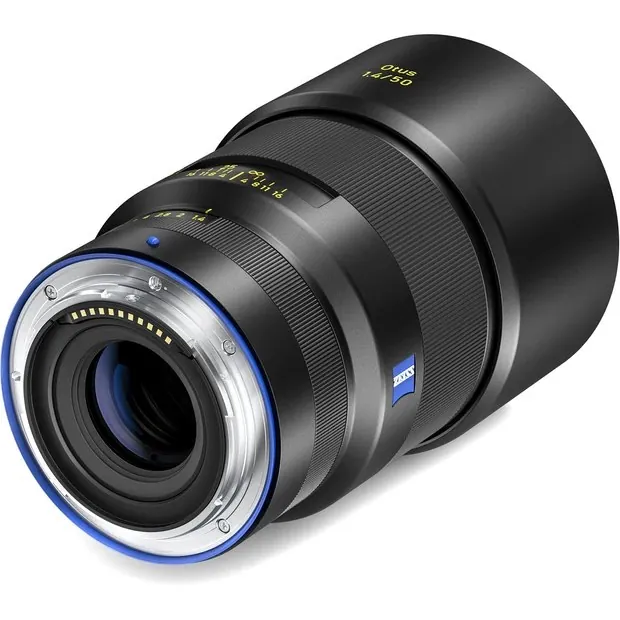
Every premium lens has to answer for its price, and the Zeiss Otus ML 50mm f/1.4 has the hardest version of the question. It is a manual focus lens: no motor, no autofocus, no stabilisation, in Sony E, Nikon Z and Canon RF mounts, at a launch price of $2,500. Competent autofocus 50mm lenses for the same mounts sell for a few hundred dollars. The Otus argument is that focusing was never the expensive part of a lens, and that a buyer who takes the motor out can spend the whole budget on glass, metal and correction.
The name carries the evidence. The original Otus 55mm f/1.4 APO-Distagon, launched in 2013 for DSLR mounts at about $4,000, was built to demonstrate how far correction could be pushed when size and cost were set aside: 12 elements in 10 groups, 970 grams in Nikon mount form and 1,030 grams in Canon form, and an apochromatic design brief that treated colour fringing as a defect to be designed out rather than a flaw to be profiled away in software. It became the reference standard for 50mm class optics for a decade, at the price of being a lens most photographers admired and few carried.
Smaller, sealed, and still uncompromising on paper
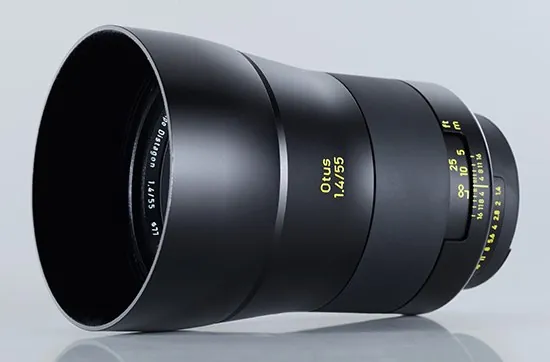
The ML generation keeps the brief and shrinks the bill of materials. The 50mm f/1.4 is a new Distagon design of 14 elements in 11 groups, including two aspherical elements and four elements of anomalous partial dispersion glass, with Zeiss's T* coating, a ten blade diaphragm and a closest focus of 0.5 metres. It is weather sealed, built of metal, and made in Japan. Weight depends on mount: 677 grams in Sony E, 697 in Canon RF and 718 in Nikon Z, against the original's 970 grams and up before an adapter is even fitted. The price fell by a comparable proportion, from about $4,000 to $2,500, and street prices at major retailers have since dropped below the launch figure, a reminder that even statement lenses obey retail gravity.
Zeiss
What the money buys, mechanically, is throw and feedback. The focus ring turns through about 260 degrees on a helicoid, with engraved distance and depth of field scales, so focus is set by a precise, repeatable gesture rather than by a motor's interpretation of one. The filter thread is a standard 67mm, and the maximum magnification of 1:7.3 at the 0.5 metre closest focus marks the lens as a general purpose standard rather than a close up specialist. The aperture ring clicks, and can be de-clicked for video work by a switch at the mount. Electronic contacts report aperture and focus data to the body, so EXIF records are complete and in body stabilisation and focus aids work as they should. Manual focus here is not nostalgia; it is the deliberate removal of every component that can hunt, hesitate or fail, leaving the photographer's hand as the only actuator.
The comparison that clarifies it
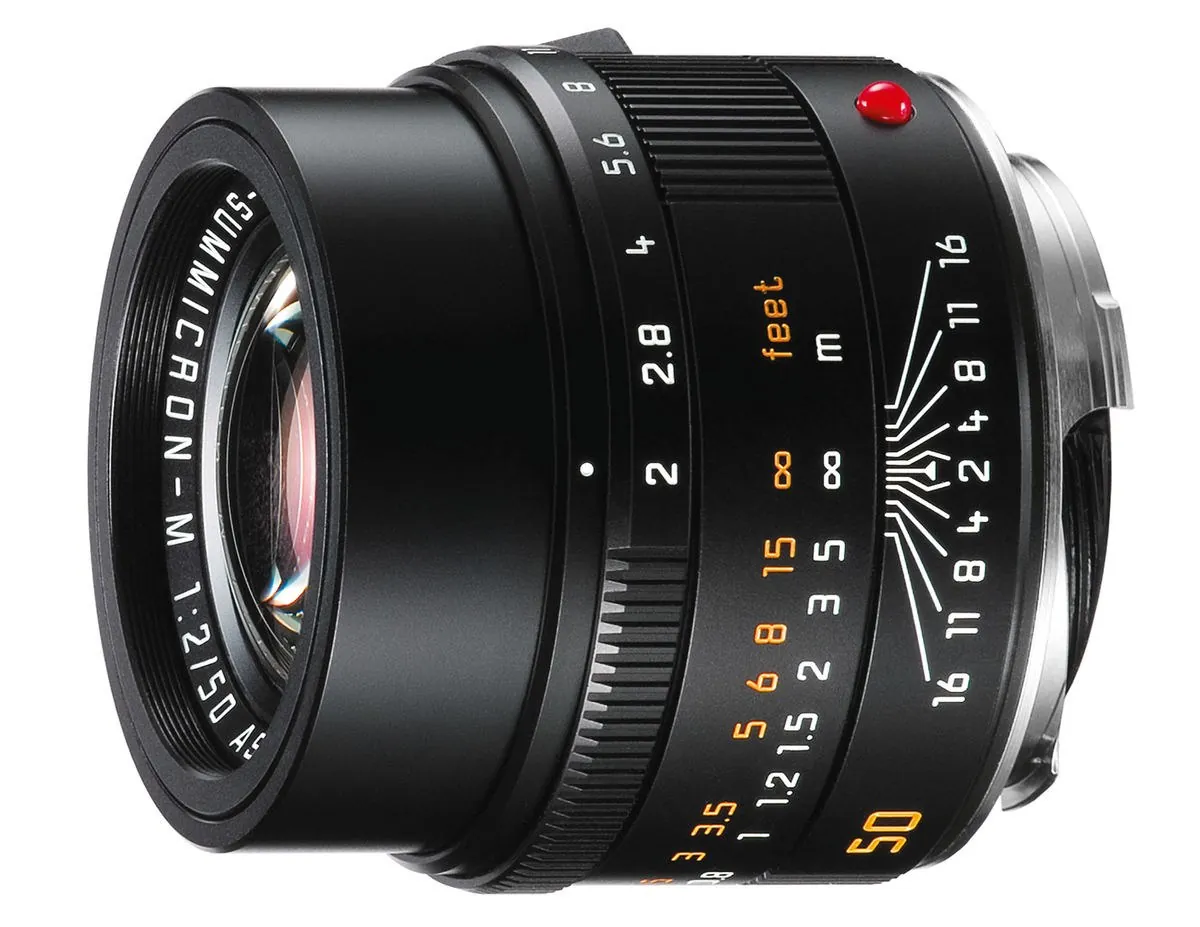
Leica makes the same argument from the other direction. Its APO-Summicron-M 50mm f/2 buys apochromatic correction at a slower maximum aperture and a fraction of the size, for a rangefinder that could not use autofocus in any case. Zeiss buys the same correction at f/1.4, with the glass bill that aperture demands, for cameras that focus themselves perfectly well and are being asked, pointedly, not to. That these two lenses coexist at high prices says the market for corrected, manual, mechanically honest 50mm lenses is real on both sides of the rangefinder divide.
JuzaPhoto
The family is still growing. The Otus ML 50mm was joined by an 85mm f/1.4 at $2,999, and in February 2026 Zeiss added the Otus ML 1.4/35 at $2,299, taking the line to the classic three lens set of 35, 50 and 85. Reporting in October 2026 suggests further Otus ML lenses are in development, with a mirrorless successor to the DSLR era 100mm the expected next step, though Zeiss has announced nothing. This publication has not tested the Otus ML; the case made here is from its specification and its lineage. Both are unusually legible. In a lens market converging on lighter, cheaper and software corrected, the Otus line is the standing counterproposal: correction in glass, focus by hand, and a price that is the argument rather than an apology.
Specifications
| Focal length and aperture | 50mm f/1.4 to f/16, manual focus, 10 blades |
|---|---|
| Construction | 14 elements in 11 groups, 2 aspherical and 4 anomalous partial dispersion elements, T* coating |
| Focus throw | About 260 degrees, helicoid, engraved scales |
| Closest focus | 0.5m |
| Weight | 677g (Sony E), 697g (Canon RF), 718g (Nikon Z) |
| Price | $2,500 at launch (2025) |
Spotted an error? We correct openly: see our corrections policy.