news
Sigma's 20-60mm f/2.8-4 Starts Where Most Standard Zooms Do Not
The new Contemporary zoom opens at 20mm, weighs 385 grams, focuses to 15.8 centimeters and costs $849. Sigma's answer to the kit lens has arrived.

Sigma
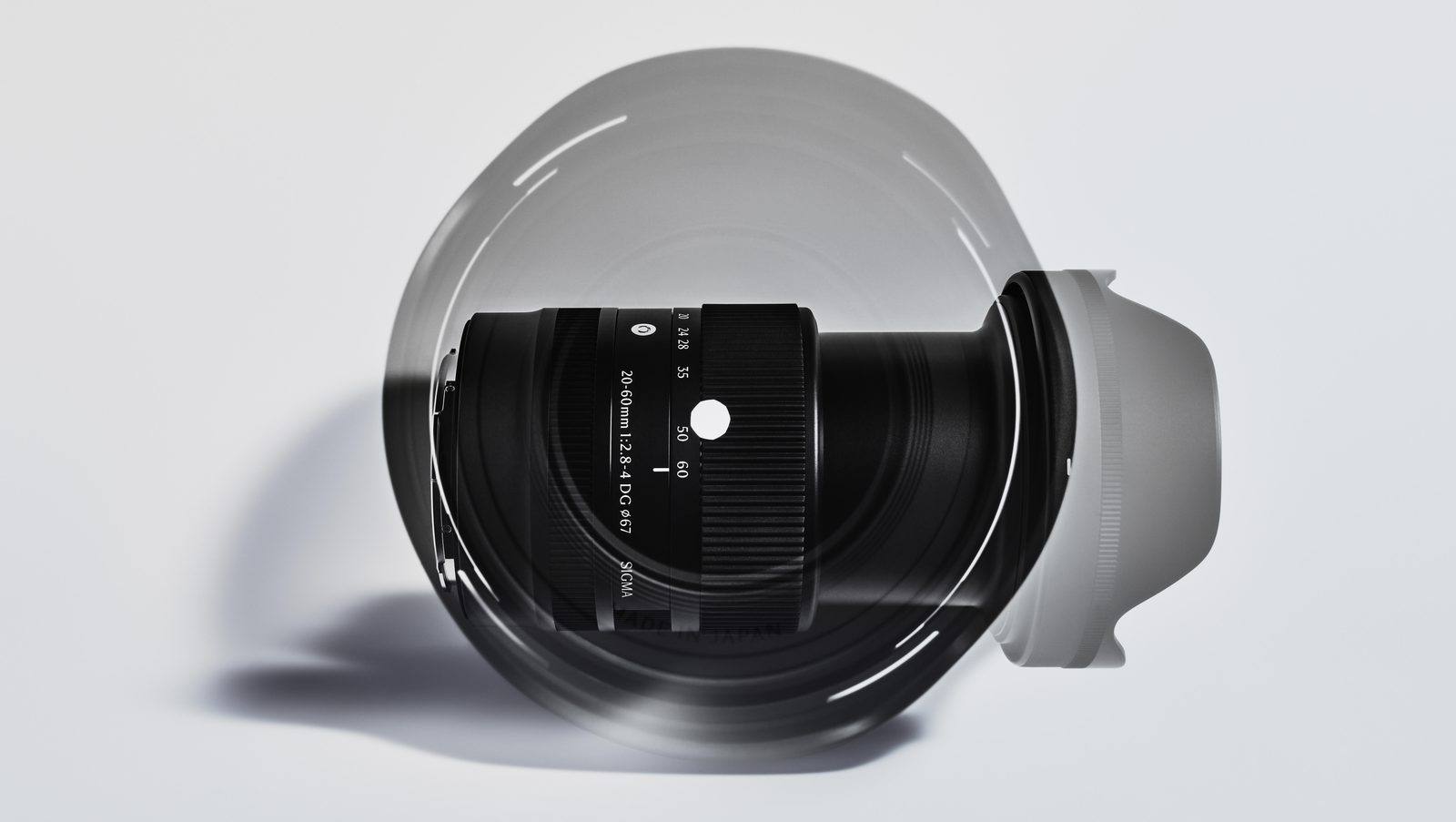
Most standard zooms start at 24mm or 28mm. Sigma's newest Contemporary lens starts at 20mm. The 20-60mm f/2.8-4 DG Contemporary, announced on September 8 by Sigma Corporation of Kawasaki and launched in Japan on September 30, is a full-frame standard zoom with an ultra-wide front door: f/2.8 at 20mm, easing to f/4 by 60mm, in a barrel that weighs 385 grams in L-Mount and 375 grams in Sony E. It reached American dealers on October 6 at $849.
The wide end is the whole argument. The field of view gained going from 24mm to 20mm is substantial, the difference between a general-purpose zoom and one that can genuinely handle interiors, architecture and landscapes without a lens change. Sigma pairs that reach with close-focus ability that borders on the macro: 15.8 centimeters minimum focus at 28mm, a maximum magnification of 1:2.3 at 35mm, and 1:2.9 maintained at the 60mm end. Few zooms in this class focus this close; fewer still keep the magnification useful across the range.
Sigma
The construction
The optical formula runs to fifteen elements in thirteen groups, with three aspherical elements and three SLD (special low dispersion) elements doing the corrective work. Autofocus comes from Sigma's HLA high-response linear actuator, the same family of motor used across the company's recent designs, with an emphasis on speed, precision and quiet operation for hybrid stills and video use. Focus breathing is stated as minimized, a nod to the video shooters Sigma now courts as a matter of course.
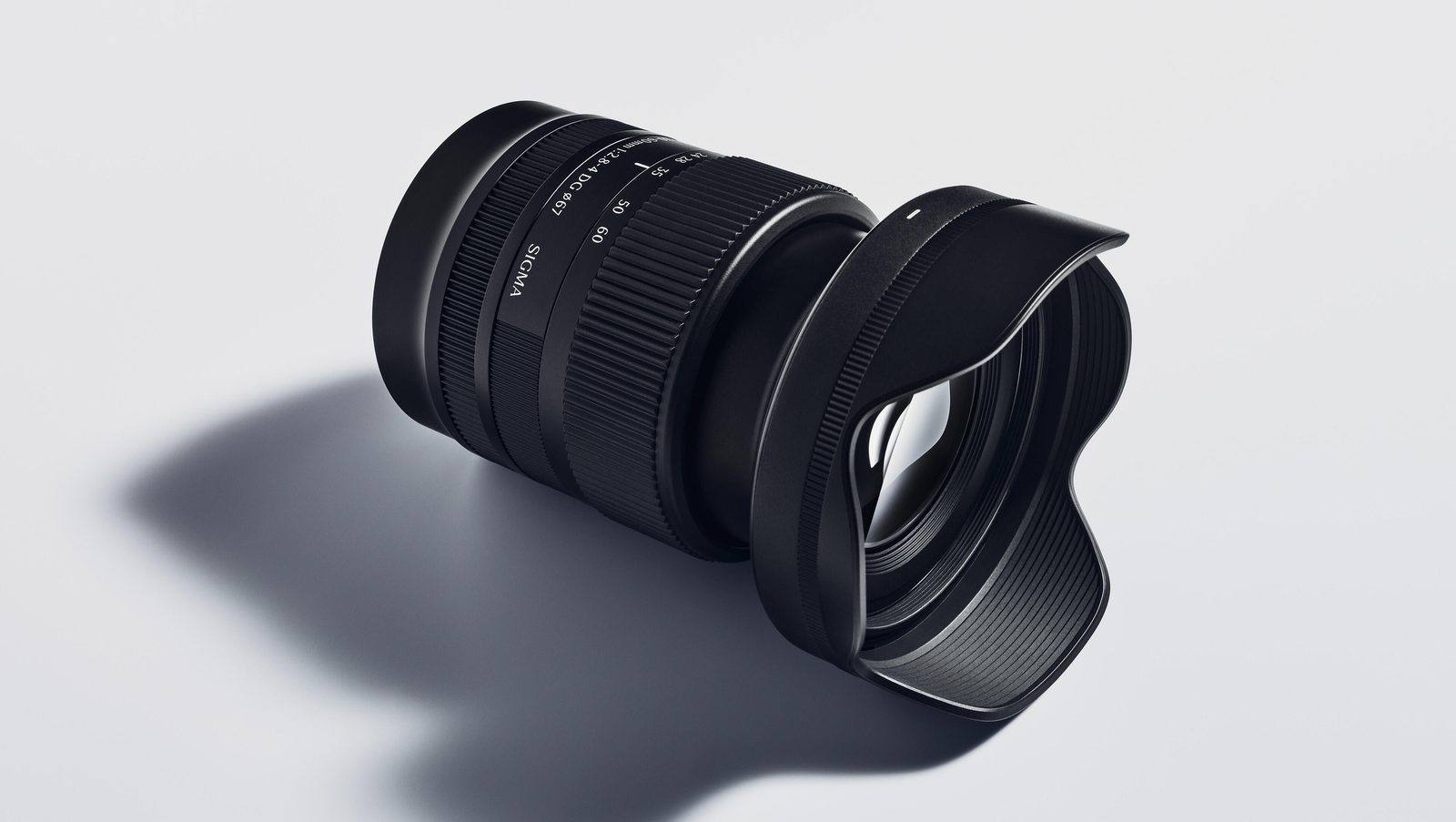
The barrel is dust and splash resistant, with a water and oil repellent coating on the front element, and the front filter thread is a common 67mm. The aperture diaphragm uses nine blades. Dimensions are modest: 86 millimeters long in L-Mount, 88mm in Sony E, with a 72.2mm barrel diameter. In the box are the LH706-04 hood, front and rear caps and a pouch. The E-mount version is built under Sony's disclosed E-mount specifications license, the standard arrangement for third-party autofocus lenses. In the hand, on paper at least, this reads as the rare zoom that disappears into a small bag rather than defining it.
Sigma
Where it sits
The Contemporary line has always been Sigma's portability play against the faster, heavier Art series, and the 20-60mm extends that logic to its natural conclusion. Since the three-line structure was introduced, Contemporary has meant compact, well-corrected lenses for photographers who would rather carry the camera than the bag. This lens is the idea at full stretch: a zoom range that would once have demanded a professional-sized barrel, delivered at the weight of a prime.
The mount choice is part of the strategy. Sigma has been a member of the L-Mount Alliance since its founding alongside Leica and Panasonic, and the 20-60mm arrives first for L-Mount and Sony E, the two systems where Sigma's compact designs have found their most natural home. Panasonic's full-frame bodies in particular have been waiting for exactly this kind of lens: small, stabilized-ready, video-conscious. The minimal focus breathing and the HLA motor's quiet operation are not afterthoughts; they are the specification of a lens designed for hybrid shooters from the start.
The closest conceptual rival is Tamron's 20-40mm f/2.8, which trades telephoto reach for a constant aperture. Sigma's bet is that buyers will take the extra 20mm of reach and the near-macro close focus over the constant f/2.8, at a price that undercuts most first-party standard zooms by a wide margin. It is a reasonable bet. The photographers most likely to buy this lens are not choosing between it and a 24-70mm f/2.8; they are choosing between it and the kit zoom that came with the camera, and on that comparison the 20-60mm wins on every axis that matters: wider, faster at the wide end, closer-focusing, and barely heavier.
It is available in L-Mount and Sony E only, which will disappoint Canon RF and Nikon Z shooters, a limitation reviewers have already noted. Within its mounts, though, the proposition is unusually clear: one lens, 20 to 60mm, under 400 grams, under $900, close enough to focus at arm's length. For the photographer who bought a body with a slow kit zoom, this is the first serious replacement that does not ask them to carry a professional workhorse. That is a narrow brief, and Sigma has met it precisely.
Spotted an error? We correct openly: see our corrections policy.