feature
One Standard Lens, Two Answers: Fujifilm's GF 55mm f/1.7 Meets Hasselblad's XCD 55V
Both are standard primes for 44 by 33mm sensors, giving a field of view near 43 to 44mm in full frame terms. Fujifilm spent its budget on speed at f/1.7. Hasselblad spent its on a leaf shutter and 372 grams. The comparison shows what medium format buyers are actually choosing between.
Camera Electronic
Every medium format system eventually has to answer the same question with a standard prime: a lens of about 55mm on the 44 by 33mm format, giving the field of view of a 43 or 44mm lens on full frame, close to the diagonal of the sensor and close to natural vision. Fujifilm and Hasselblad have answered it in opposite ways, and placing their two standard primes side by side is the quickest way to see what each system thinks its customers value.
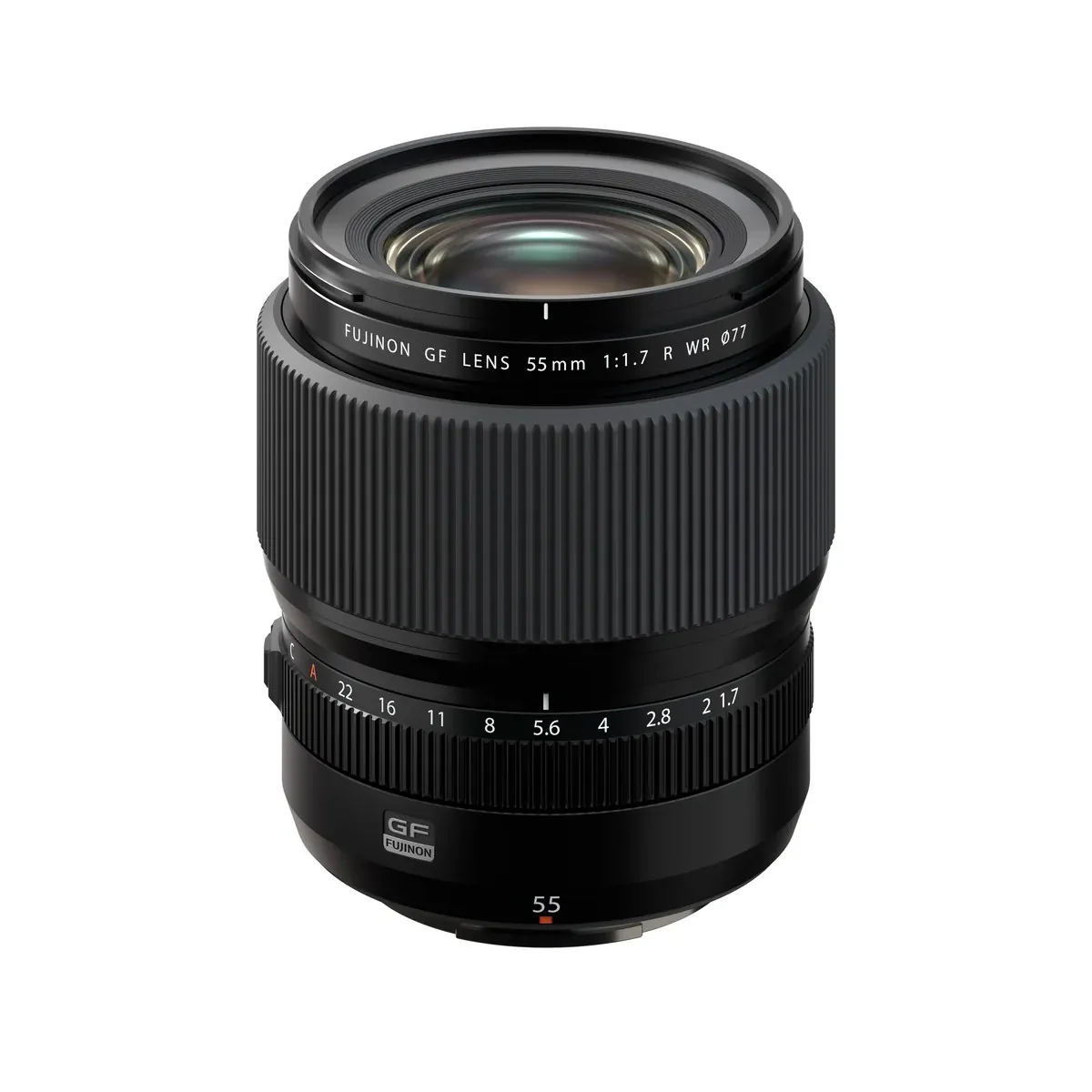
Fujifilm's answer is speed. The GF 55mm f/1.7 R WR, launched in September 2023 alongside the GFX100 II, opens to f/1.7, the fastest aperture in the GF catalogue at its standard focal length. The optical design runs to 14 elements in 10 groups, including two aspherical and two extra low dispersion elements, behind an 11 blade rounded diaphragm. It focuses to 0.5 metres, takes 77mm filters, is weather resistant, and weighs 780 grams at 99.3mm long. United States pricing sits at about $2,600. Autofocus is driven by a DC motor, because in the GFX system the shutter lives in the body and the lens is free to be purely an optical instrument.
Hasselblad's answer is the shutter
Hasselblad's XCD 2,5/55V stops at f/2.5, a full stop and a fraction slower, and spends the saving on everything Fujifilm left out. The lens carries its own leaf shutter, as every XCD lens does, which gives flash synchronisation at shutter speeds up to 1/2000 of a second, a working advantage for portrait and location photographers that no focal plane shutter matches. The design is nine elements in eight groups including three aspherical elements, it focuses to a minimum distance of 0.45 metres measured from the image plane, takes 72mm filters, and weighs 372 grams, less than half the Fujifilm, at 72mm long. It costs $3,699, which is to say the slower lens is the more expensive one, and the shutter is a large part of why.
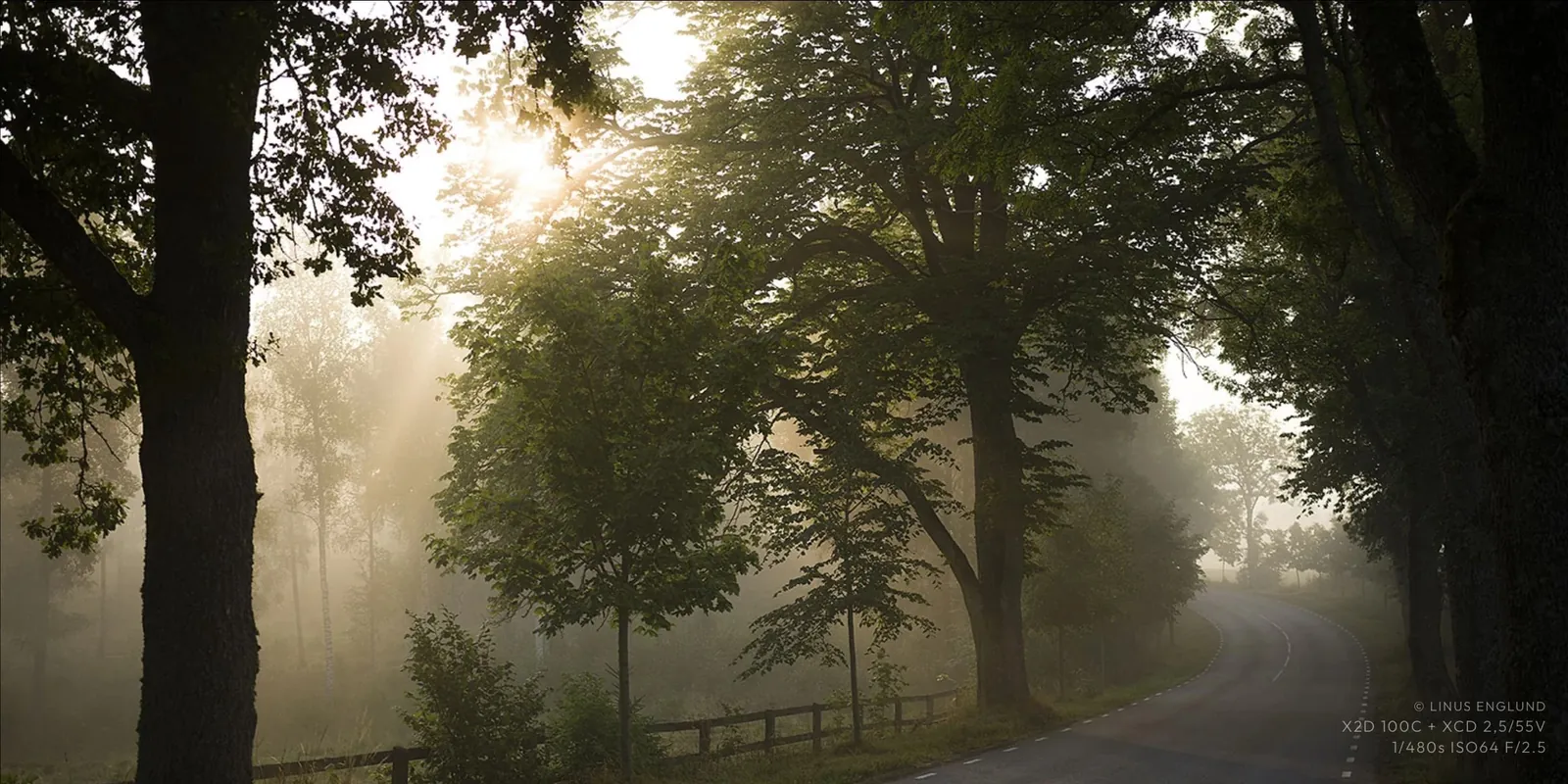
Hasselblad
The depth of field arithmetic softens the apparent gap. On the 44 by 33mm format, an f/2.5 lens separates a subject roughly as an f/2 lens does on full frame, and the GF lens at f/1.7 behaves, in depth of field terms, like a lens of about f/1.35 on a smaller camera. Both are firmly in portrait territory wide open. What f/1.7 buys that equivalence cannot is light itself: a stop and a fraction more of it, at the same shutter speed, on sensors whose owners frequently work at the edge of available darkness. What the leaf shutter buys is equally concrete, and it is bought at every aperture, not only wide open.
Two systems describing themselves
The supporting details point the same way. Fujifilm built the GF 55mm as the first GF lens with 11 diaphragm blades, a decision about the shape of out of focus highlights, and gave it an aperture ring and weather sealing for field work. Hasselblad built the 55V as one of a matched family of f/2.5 V lenses sharing handling, filter size and control layout, a decision about consistency across a kit. One lens is a statement piece for a system that competes on specification. The other is a system component from a maker that competes on coherence, and charges for the shutter in every barrel.
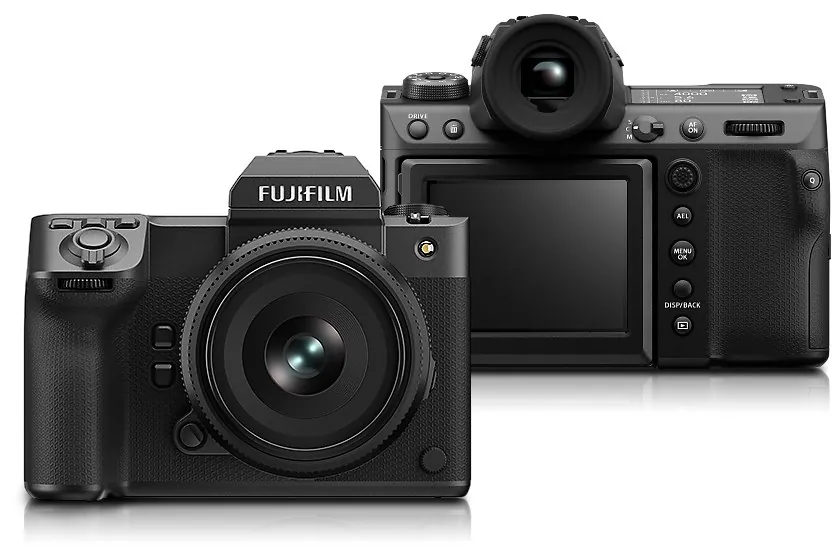
Fujifilm
For a buyer choosing between GFX and the X system, the bodies usually get the attention, but this pair of lenses is the more honest comparison, because a standard prime is the lens that stays on the camera. Choose Fujifilm's answer and the system is faster, heavier and cheaper at the focal length you will use most, with the shutter question settled by the body. Choose Hasselblad's and every lens you own carries its own shutter, the kit stays light, and the speed ceiling is set a stop lower by design. Neither answer is a compromise made by accident. They are the two systems' philosophies, expressed at 55mm, and the choice between them is really a choice about which kind of photograph you make more often: the one that needs more light, or the one that needs flash to behave. That both lenses sit near the top of their makers' standard prime pricing, while taking opposite routes to justify it, is the clearest sign that medium format's centre of gravity has moved from resolution alone to the character of the working kit built around the sensor.
Specifications
| GF 55mm f/1.7 R WR | 14 elements in 10 groups, 780g, 0.5m minimum focus, 77mm filter, about $2,600 |
|---|---|
| XCD 2,5/55V | 9 elements in 8 groups, 372g, leaf shutter with flash sync to 1/2000, 72mm filter, $3,699 |
| Shared ground | 55mm on 44 x 33mm, about 43 to 44mm full frame equivalent field of view |
Spotted an error? We correct openly: see our corrections policy.