feature
One Sensor, Three Answers: How Leica's M, SL and Q Divide the Work
Leica sells three full frame systems built around closely related 60 megapixel technology: a manual rangefinder, a mirrorless workhorse on the shared L-Mount, and a fixed lens compact. The differences are not about image quality. They are about which decisions a photographer wants to keep.
Leica Camera AG
Leica is the only camera maker whose full frame range asks its customers a philosophical question before it asks for money. The company sells three systems, the M, the SL and the Q, built around closely related 60 megapixel sensor technology with the same triple resolution choice of 60, 36 or 18 megapixels. Image quality is therefore not the deciding factor between them, and Leica knows it. What differs is everything around the sensor: how you focus, whether you may change lenses, which other companies' lenses fit, and how much of the photographic process the camera is allowed to automate.
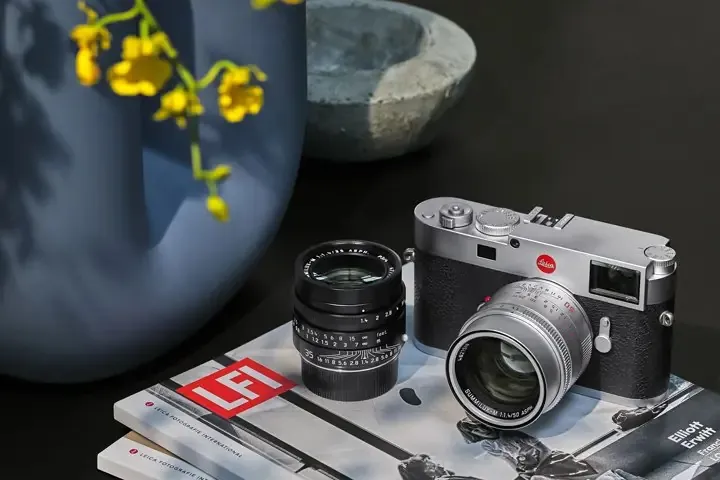
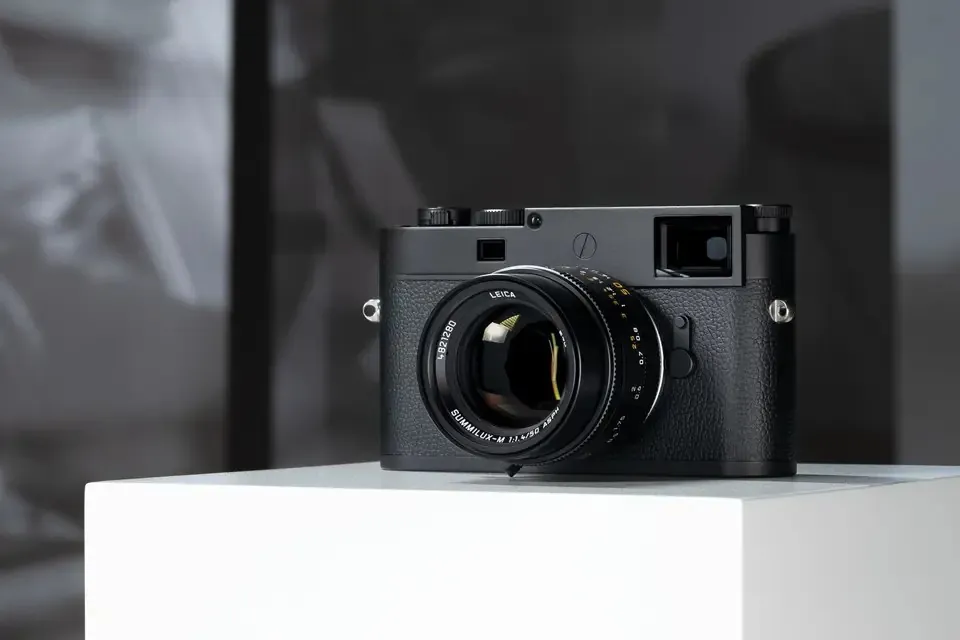
Start with the oldest answer. The M11 is a digital rangefinder: manual focus only, through an optical window that shows bright frame lines rather than the lens's own view, on a mount that accepts M lenses made since 1954. Its sensor is a back illuminated CMOS with Triple Resolution Technology, recording DNG raw files at the three resolutions across the full sensor area, with a sensitivity range of ISO 64 to 50,000. There is no video worth the name and no autofocus at all. By the standards of a modern specification sheet it is a deliberately incomplete camera, and it is the company's flagship. The M's proposition is continuity: the lenses, the focusing gesture and the small unobtrusive body are the system, and the sensor is simply the current film.
The SL: Leica inside the industry standard
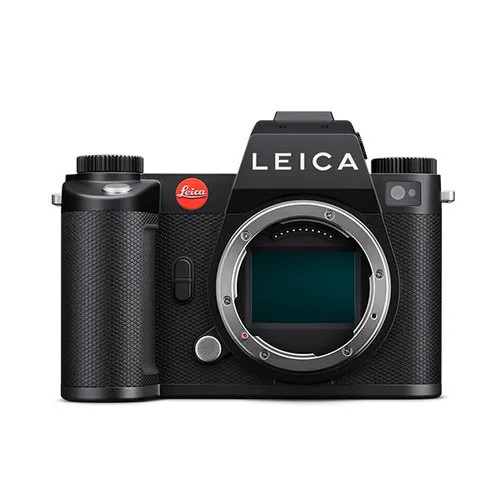
The SL line makes the opposite bet. The SL3 is a full size mirrorless body on the L-Mount, the mount Leica shares with Sigma and Panasonic under the L-Mount Alliance, which gives it access to one of the largest native lens catalogues in full frame, including the Sigma lenses covered elsewhere in this week's reporting. It carries the same triple resolution sensor approach as the M11 into a weather sealed body with hybrid autofocus, in body stabilisation and 8K video. Where the M refuses the modern checklist, the SL completes it. Its buyers are professionals who want Leica's colour science, build and SL lenses without giving up the working methods every other system uses.
DivePhotoGuide
The contrast matters because the two cameras share so much silicon. Put the same sensor family behind a rangefinder window and behind an electronic viewfinder with subject detection, and you get two instruments that produce near identical files and almost opposite working days. Leica can sustain both because its customers divide cleanly: those who regard automation as assistance, and those who regard it as interference. Most manufacturers resolve that argument by picking a side. Leica monetises it.
The Q: the lens is the system
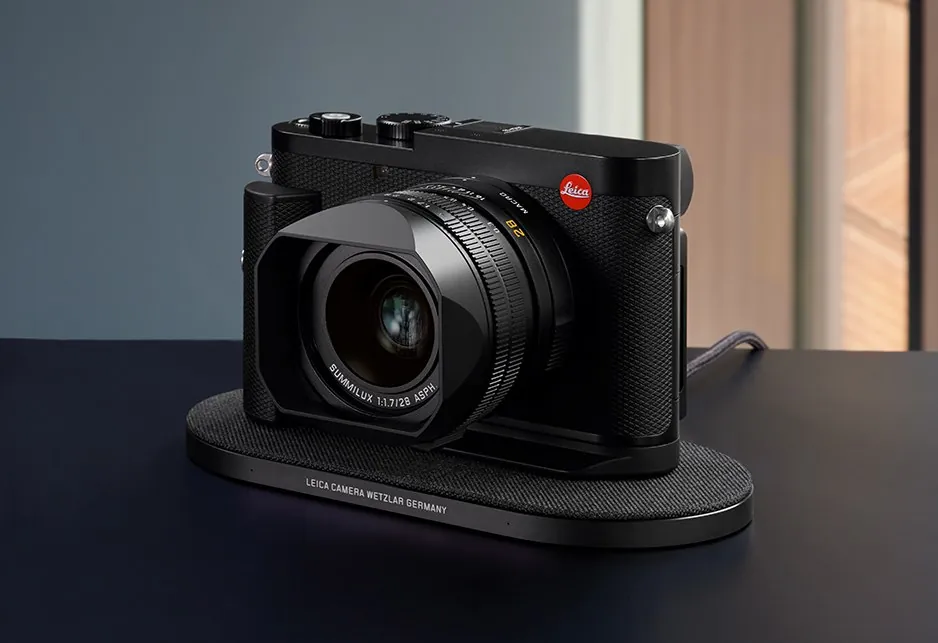
The Q3 removes the remaining decision. Its 60 megapixel sensor, again with triple resolution and an ISO range of 50 to 100,000, sits behind a fixed Summilux 28mm f/1.7 ASPH. lens with an integrated macro mode focusing to 17 centimetres. Focal lengths beyond 28mm are offered as in camera crops, to 35, 50, 75 and 90mm, spending the sensor's resolution in place of a lens change. It has phase detection autofocus and records 8K video, facilities the M11 lacks entirely, in a compact body closer to the M in size than to the SL. A tilting three inch touchscreen and a 5.76 million dot OLED viewfinder complete a specification that is, feature for feature, the most modern of the three cameras, which is precisely the point: the Q buyer is not purchasing a lesser Leica, but a different distribution of the same technology.
Leica Camera AG
The Q is sometimes described as the entry point to Leica, which undersells the idea. It is better read as a judgement about where photography's friction actually sits. For many photographers the binding constraint is not lens choice but readiness: one camera, one field of view, no bag, no deliberation. The Q3's commercial success, strong enough to support special editions such as the Q3 43 with its longer fixed lens, suggests that judgement is widely shared.
Three systems, then, dividing one sensor three ways: the M keeps the decisions, the SL delegates them to the camera, and the Q abolishes most of them at purchase. Rivals segment their ranges by sensor size and price. Leica segments by temperament, and charges accordingly at every level. For a photographer choosing within the brand, the useful question is not which camera is best. It is which set of decisions you still want to make yourself, because that, precisely, is what each of these prices buys.
Specifications
| Shared ground | Full frame BSI CMOS with Triple Resolution Technology: 60, 36 or 18 megapixels |
|---|---|
| M11 | Rangefinder, manual focus, M mount (lenses since 1954), ISO 64 to 50,000 |
| SL3 | L-Mount mirrorless, hybrid autofocus, 8K video, weather sealed |
| Q3 | Fixed Summilux 28mm f/1.7 ASPH., macro to 17cm, ISO 50 to 100,000, 8K video |
Spotted an error? We correct openly: see our corrections policy.