news
Hammertone Returns: Leica Finishes the M-A and the M11-P as Instruments
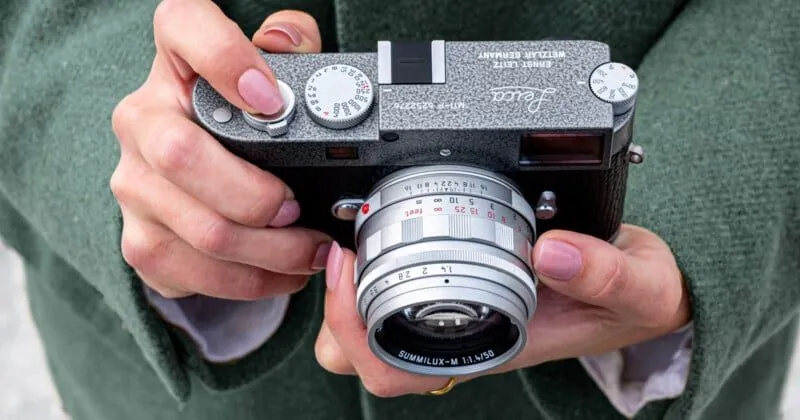
Announced on November 12 and on sale the same day at $8,000 and $10,950, the M-A Hammertone and M11-P Hammertone revive a textured industrial finish Leica has used only a handful of times since the 1960s, on solid brass plates, with each camera’s pattern unique.
Leica Camera AG
Leica's newest special editions change nothing about how its two most traditional cameras work, and that is precisely their subject. The M-A Hammertone and the M11-P Hammertone, announced on November 12 and on sale worldwide the same day, wrap a purely mechanical film rangefinder and the company's flagship digital rangefinder in the same textured grey finish, a coating Leica has reached for only a handful of times in its history. The M-A version costs $8,000 in the United States; the M11-P version costs $10,950. Neither edition is individually numbered, and Leica expects availability to be limited.
The finish gives the pair their name. Hammertone is a textured metallic coating with roots in German industrial design of the 1930s, where it was used on precision instruments and laboratory equipment because it wore well and hid the marks of work. The mottled surface is not applied as a pattern. It forms while the coating dries, as metal pigments and additives set up local differences in surface tension, and the result reads as a shallow hammered texture that catches light unevenly. Because the pattern emerges from the drying process rather than from a mould or a print, no two cameras carry exactly the same surface.
A finish Leica has mostly kept in reserve
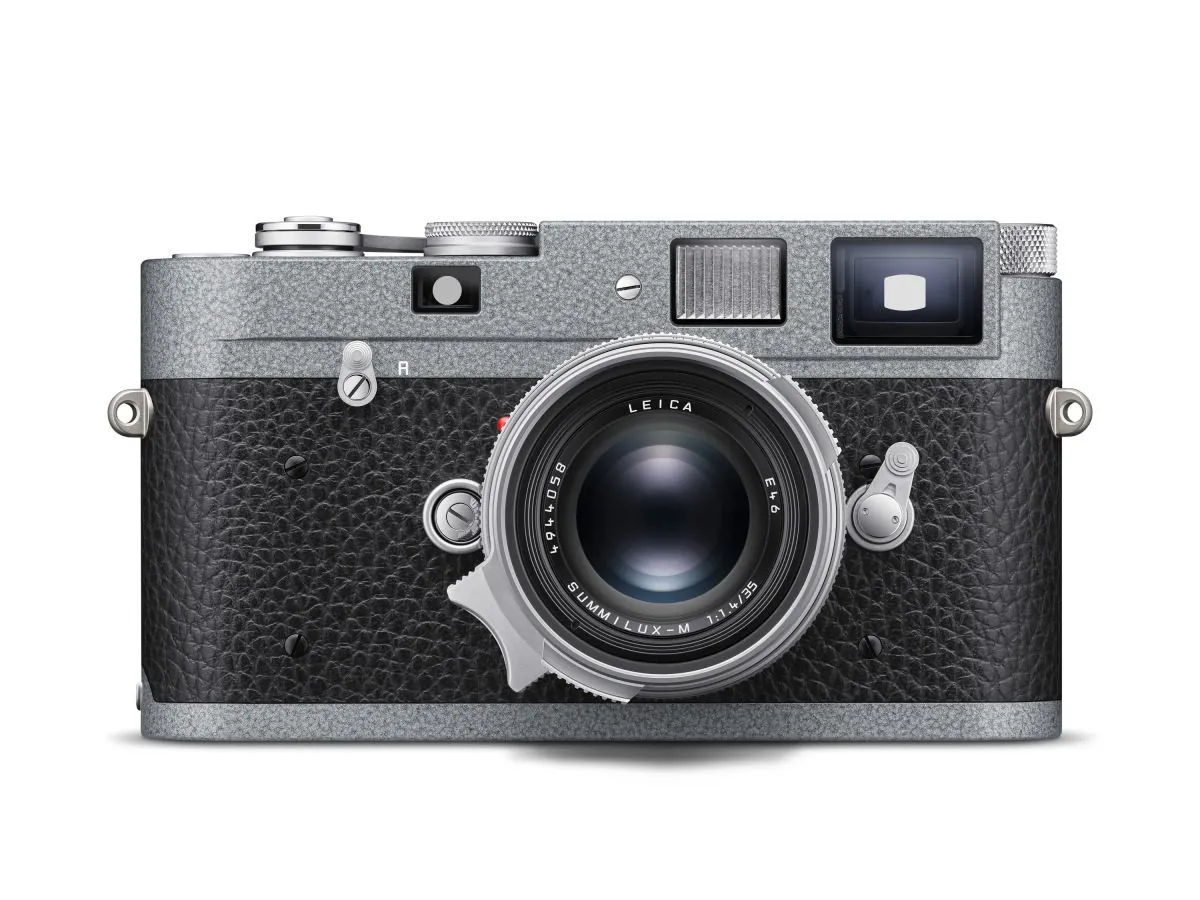
On Leica cameras the finish is genuinely rare. The lineage the company cites runs from the MD documentation cameras built for the Leitz Reprovit copying system to the MD Hammertone of 1964, of which only ten examples were made, and then through the MP LHSA of 2003, the M9 Hammertone of 2011 and the M-A Vienna Edition of 2016. For the new pair, Leica says it reworked the application process at Wetzlar so the texture sits consistently across the whole camera while keeping the irregular character that defines it. The top and bottom plates of both models are solid brass under the coating, the body covering is a black leatherette in the vulcanite style, the control dials carry traditional cross knurling, the shutter release is finished in bright silver, and the engravings are filled in white.
Leica Camera AG
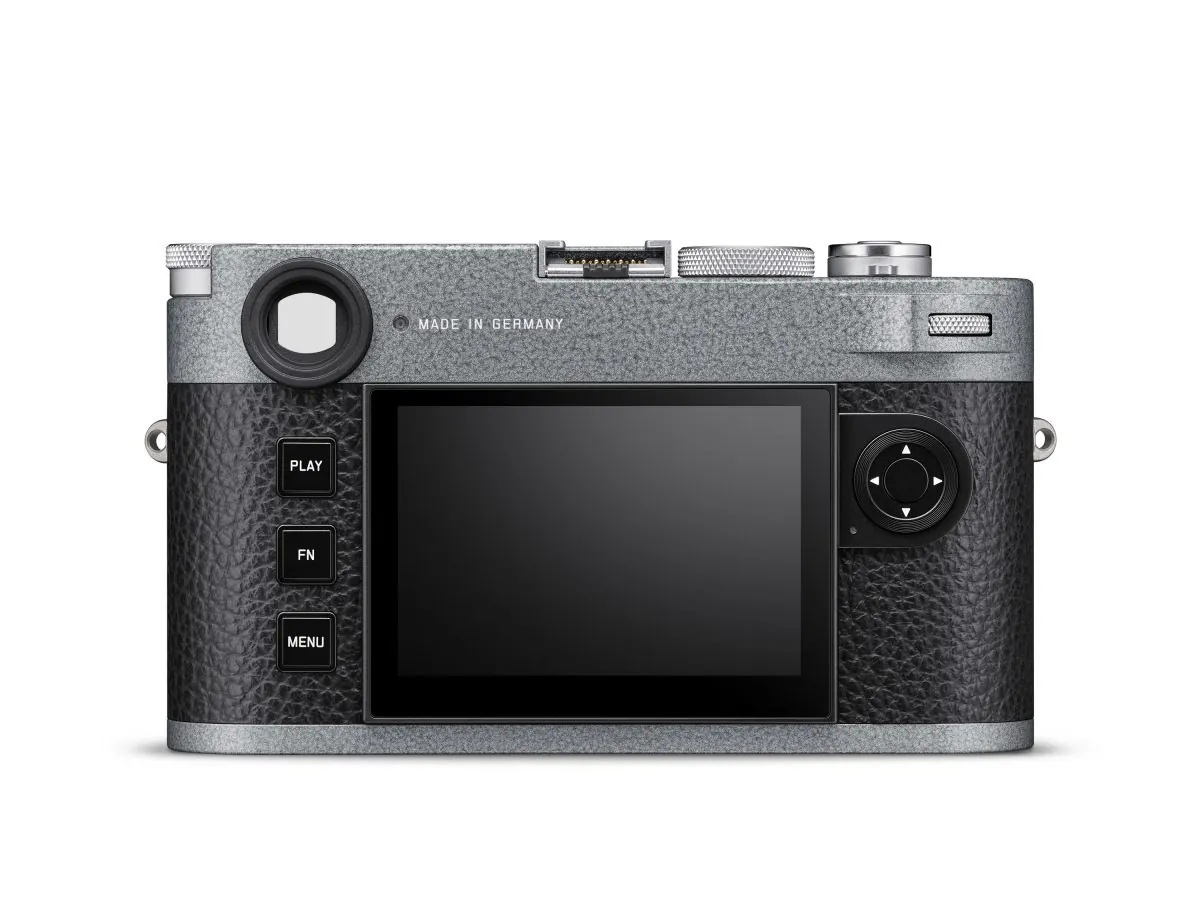
The digital camera receives two further changes that the film camera does not need. The edges of its top and bottom plates are newly rounded, in a more classical profile than the standard M11-P, and the screw on the front of the body is finished in silver chrome. Its BP-SCL7 battery is supplied in a matching hammertone finish, a small piece of thoroughness that owners will notice every time the baseplate comes off.
Two cameras, one argument
Under the finish, both cameras are their standard models, unchanged. The M11-P Hammertone keeps the platform this publication has covered since its launch: a full frame back illuminated CMOS sensor of 60.3 megapixels with Triple Resolution Technology offering 60, 36 or 18 megapixel capture, the Maestro III processor, 256 gigabytes of internal memory alongside its card slot, and the Content Credentials system that signs images at capture. The M-A Hammertone is the opposite pole of the same mount: a fully mechanical 35mm rangefinder with no light meter, no electronics and no battery, a 0.72 magnification bright line viewfinder, and a horizontal cloth focal plane shutter running from one second to 1/1000 second plus Bulb. Its frame line pairs cover 28 and 90mm, 35 and 135mm, and 50 and 75mm lenses. A roll of Kodak Tri-X 400 is included in the box, which is the correct accessory for a camera that asks its owner to judge light unaided.
Leica Camera AG
Special editions are usually read as collector exercises, and these will be collected. But the pairing is more interesting than the finish alone. Leica has put the same industrial surface on the most and least automated cameras it sells, and the gesture only works because the M system genuinely spans that distance: one mount, one focusing gesture, and at the extremes a choice between a signed digital file and a shutter that would work in a power cut. Hammertone began as a finish for instruments that were expected to be used hard and kept for decades. On a film M-A that expectation is literal. On a digital M11-P it is a claim about how long a digital camera should remain desirable, made in the only language collectors fully trust, which is materials.
Both models are available now through Leica Stores, the Leica Online Store and authorised dealers. Readers comparing prices across regions should note that European list prices reported at launch varied between outlets; the United States prices above are the figures in Leica's own American release, and they are the ones this publication is recording.
Specifications
| M-A Hammertone | Fully mechanical 35mm rangefinder, no meter or battery, 0.72x viewfinder, cloth shutter 1s to 1/1000 plus Bulb, $8,000 (US) |
|---|---|
| M11-P Hammertone | 60.3 megapixel full frame BSI CMOS, Triple Resolution 60/36/18, Maestro III, 256GB internal memory, Content Credentials, $10,950 (US) |
| Finish | Grey hammertone on solid brass top and bottom plates, black vulcanite style leatherette, cross knurled controls, white engravings |
| Availability | November 12, 2026, Leica Stores, Leica Online Store and authorised dealers; not individually numbered |
Spotted an error? We correct openly: see our corrections policy.