news
Sigma Completes Its APS-C F2.8 Trio at 390 Grams
The 50-120mm F2.8 DC OS Contemporary goes on sale October 22 for $799, in Sony E, Fujifilm X and Canon RF mounts. It gives APS-C the fast telephoto zoom the format has always promised and rarely delivered: a 70-200mm equivalent at a weight full frame cannot approach.
Sigma
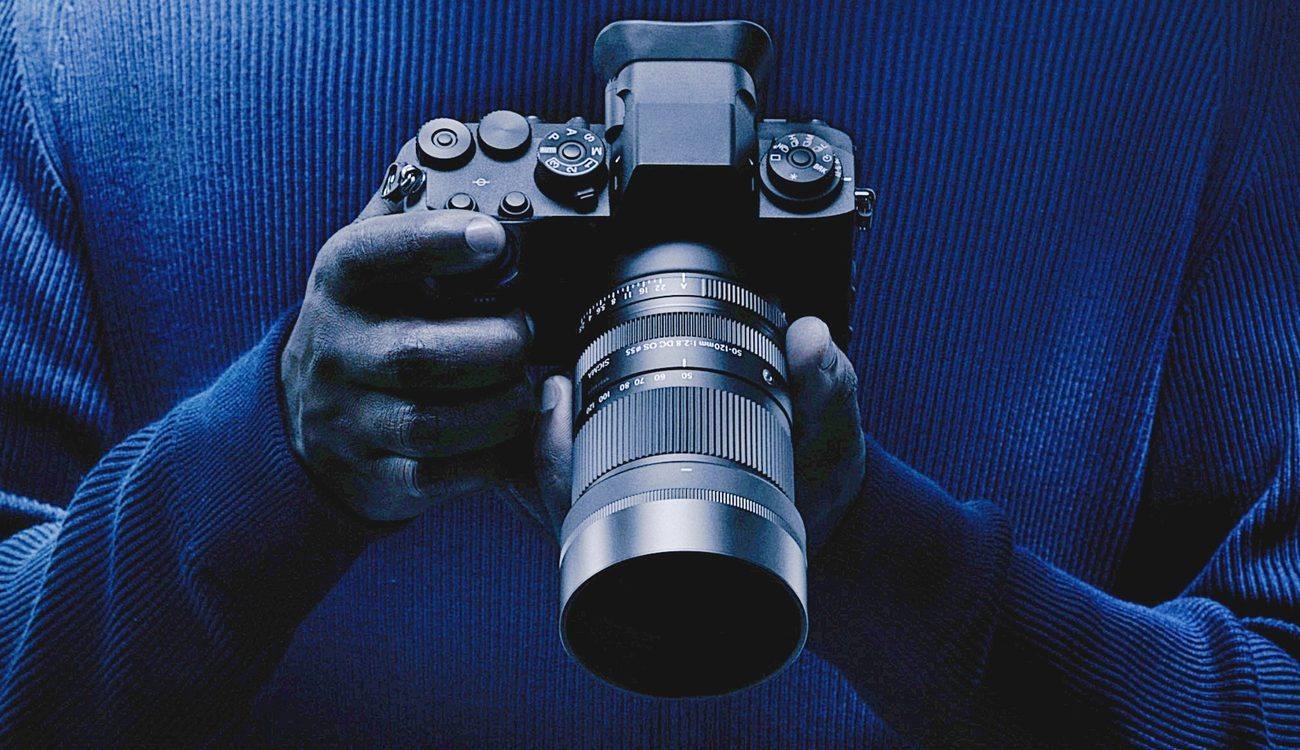
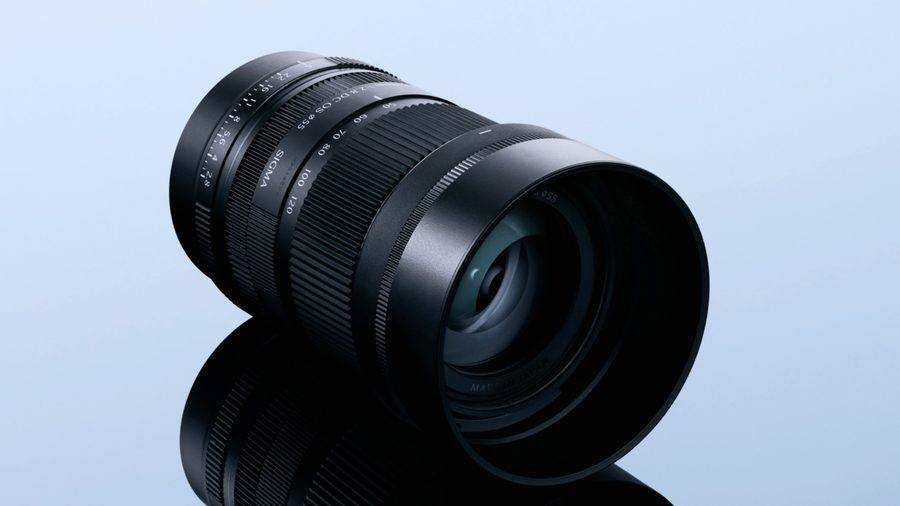
Every camera format makes a promise, and APS-C's promise has always been the same: most of the capability, much less of the weight. The promise usually breaks at the telephoto end, where a fast zoom meant adapting a full frame 70-200mm and accepting its size. Sigma's 50-120mm F2.8 DC OS Contemporary, announced on October 8 and on sale from October 22 for $799, is built to keep the promise instead. It covers roughly 75 to 180mm in full frame terms, holds f/2.8 across the whole range, and in its Sony E and Fujifilm X versions it weighs 390 grams and measures 99mm long.
The lens completes a set. Sigma's constant f/2.8 Contemporary zooms for APS-C now run from the 10-18mm through the 18-50mm to this 50-120mm, and the company puts the combined weight of all three at under one kilogram, covering about 15 to 180mm equivalent without an aperture compromise anywhere in the bag. That figure matters more than any single specification on the new lens. A three-lens f/2.8 kit at under a kilo is an argument for the format that full frame cannot answer on its own terms.
Where the weight went
The comparisons make the design trade plain. Fujifilm's own XF 50-140mm f/2.8 weighs 995 grams and is 175.9mm long. Sigma's previous fast APS-C telephoto, the DSLR-era 50-100mm f/1.8 Art, weighed 1,490 grams. The new lens reaches 20mm less far than the Fujifilm and gives up more than a stop to the old Art lens. In exchange it gives back mass: at 390 grams it undercuts the Fujifilm by more than half and the old Art lens by nearly three quarters. Neither Sony nor Canon currently sells a native APS-C telephoto zoom at f/2.8, so on those systems this lens is not an alternative to an own-brand option. It is the first option of its kind.
Sigma
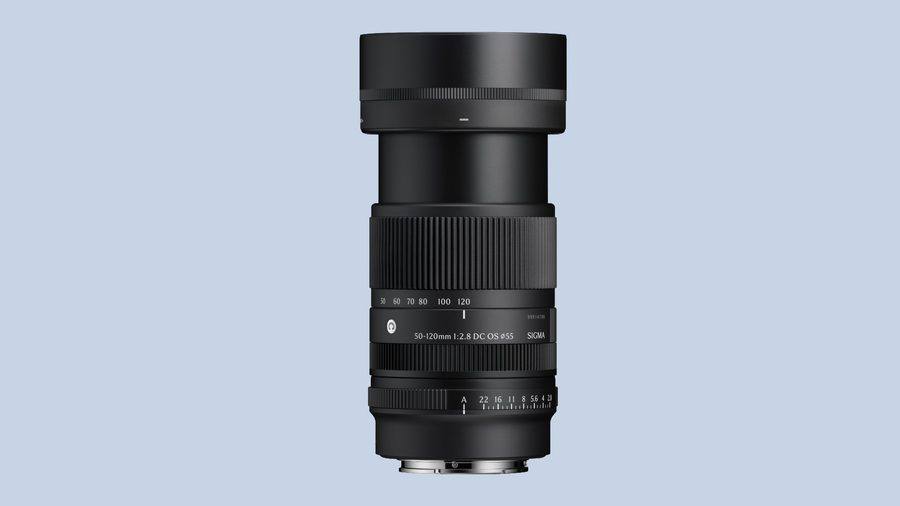
The optical formula runs to 18 elements in 13 groups. The correction lives in the glass bill: four aspherical elements, three of SLD glass and a single FLD element. Behind them sits an 11-blade rounded diaphragm, and the 55mm filter thread matches the 18-50mm. Minimum focus is 23cm at 50mm and 55cm at 120mm, giving maximum magnification of 1:3 at the wide end. The barrel extends as it zooms toward 120mm, which gimbal users should note, since the balance point moves with the focal length.
Controls, stabilization and the omissions
Two decisions deserve attention. The first is the aperture ring, the first fitted to an APS-C zoom in the Contemporary line, which Sigma describes as a response to photographers and filmmakers who prefer to set exposure by hand. The second is what Sigma left off: there are no focus mode or stabilization switches on the barrel, so both are set from the camera body, keeping the barrel simple. Autofocus is driven by an HLA linear motor, and the optical design is stated to minimize focus breathing for video work.
Sigma
Stabilization is in the lens. Under Sigma's OS2 algorithm the CIPA rating is 6.5 stops at the wide end, falling to 4.5 stops at full telephoto. That rating is not a detail for owners of APS-C bodies without in-body stabilization, a category that still includes popular video-led models across all three mounts. The build is dust and splash resistant with a water and oil repellent front coating, and the lens is made at Sigma's factory in Aizu, Japan. A hood, caps and a pouch are included. There is no tripod collar, and at 390 grams there hardly needs to be.
Context from the rest of Sigma's week sharpens the point. The company is simultaneously extending its 16-300mm travel zoom to Nikon Z mount in November, a mount this faster lens skips at launch. Sigma's APS-C strategy is plainly mount by mount and lens by lens, sequenced by where it judges demand to be strongest, rather than a single system-wide commitment made all at once. Photographers choosing an APS-C system in 2026 are, whether they know it or not, also choosing which of these sequences they stand in.
The omissions are mount-shaped. At launch there is no Nikon Z and no L-Mount version, an odd gap given that Sigma sells the lens's two companions more widely, though the company's Mount Conversion Service lets owners change between the supported mounts later. For Sony, Fujifilm and Canon APS-C photographers, however, the arithmetic is now straightforward. The classic working telephoto range at f/2.8 no longer requires a full frame lens, a full frame budget or a full frame shoulder. Whether the optical performance matches the ambition is a question only testing can settle, and this publication has not tested the lens. On paper, it is the most complete answer APS-C has had to its oldest criticism.
Specifications
| Focal length | 50-120mm (about 75-180mm equivalent; about 80-192mm on Canon RF) |
|---|---|
| Maximum aperture | f/2.8 constant |
| Construction | 18 elements in 13 groups; 11 rounded aperture blades |
| Stabilization | OS2, rated 6.5 stops at 50mm and 4.5 stops at 120mm (CIPA) |
| Weight | 390g (Sony E, Fujifilm X); 410g (Canon RF) |
| Price | $799, on sale October 22, 2026 |
Spotted an error? We correct openly: see our corrections policy.