explainer
The Role of Optical Glass in Modern Lenses
Before a lens is designed, the glass must exist. How a handful of glassmakers, and one 1884 partnership in Jena, still shape what lenses can do.
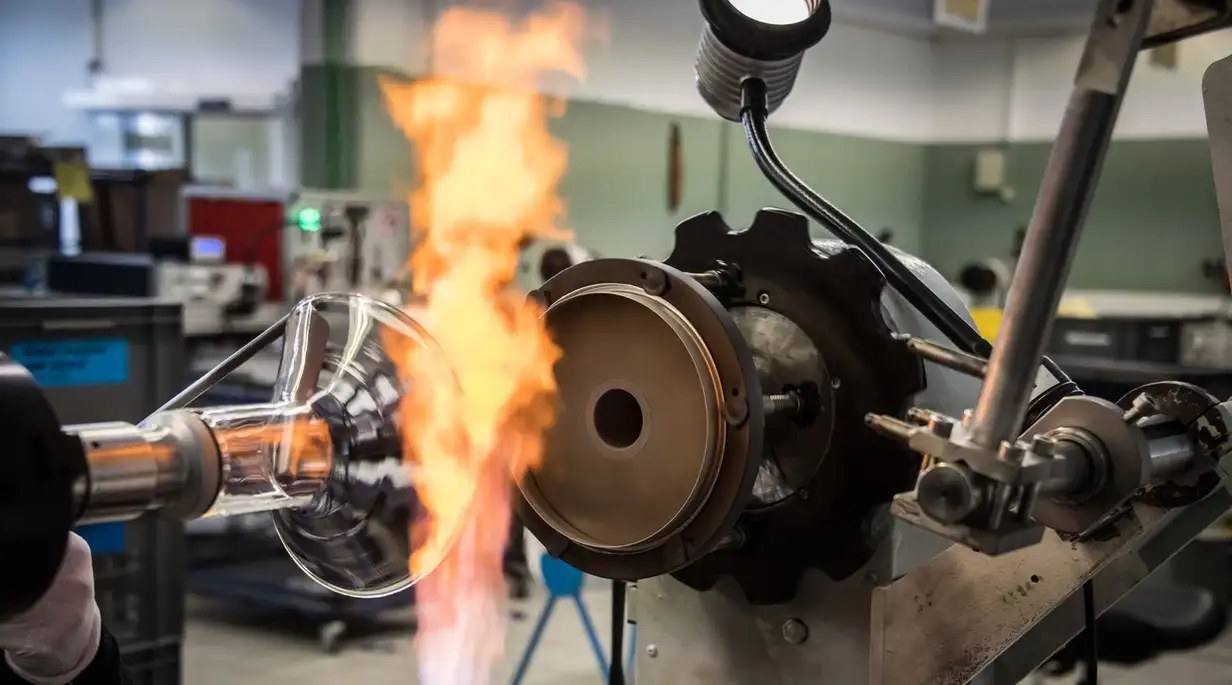
Schott AG
Lens designers do not invent glass; they shop for it. Every optical formula is a selection from catalogs maintained by a small number of manufacturers, and the properties listed in those catalogs, refractive index, dispersion, transmission, set the boundaries of what the designer can achieve. To understand why premium lenses use the glass they do, it helps to start where the modern glass industry started: in Jena, in 1884.
That year Otto Schott founded a glassworks in Jena in partnership with the physicist Ernst Abbe and the optician Carl Zeiss, with Roderich Zeiss. Abbe had already revolutionized microscope optics with Zeiss; Schott's systematic investigation of glass compositions gave designers, for the first time, a widening palette of materials with differing dispersion, which made continued progress in lens design possible. The company that resulted, Schott AG, is headquartered today in Mainz and owned by the Carl-Zeiss-Stiftung, the same foundation that owns Zeiss itself. Schott's enterprise commercialized apochromatic lenses of low chromatic aberration, and its early catalogs underpinned generations of photographic optics.
An industry of few
The cast has barely grown since. The significant producers of optical glass today are Schott in Germany; Hoya, Ohara, Hikari and Sumita in Japan; Corning in the United States; and Pilkington in the United Kingdom, with additional production in China. Most lens companies buy all their glass from these houses; a few, notably Nikon, develop and produce some special glasses themselves. Designers simply use whatever works best, and a given premium lens may well contain glass from more than one maker. During a 2026 visit to Leica's Wetzlar works, the company confirmed it sources its optical glass from Schott and Hoya, among others.
What the formulations do
Two properties dominate. Refractive index measures how strongly a glass bends light; high-index glasses let designers achieve strong refraction with shallower curves, keeping elements thin and lenses compact. Dispersion measures how much the bending varies with wavelength; it is dispersion that smears colors into fringes. Extra-low-dispersion, or ED, glasses and fluorite, crystalline calcium fluoride, minimize that smear, which is why they appear wherever chromatic correction matters: Hasselblad's XCD 55V carries an ED element, Fujifilm's GF 55mm f/1.7 uses two, and Schott's N-FK58 XLD glass was developed specifically for apochromatic correction in camera lenses.
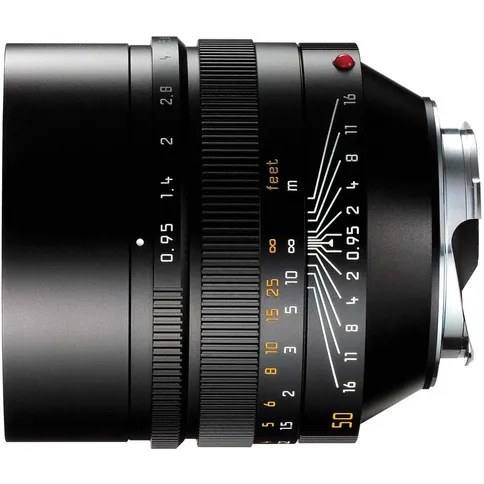
The exotic formulations go further. Anomalous partial dispersion glasses, whose dispersive behavior deviates usefully from the norm, are the key ingredient in apochromatic designs: Leica's Noctilux-M 50mm f/0.95 uses five such elements, and Zeiss builds its Otus apochromats around them. High-refractive-index glasses, three of them in the Noctilux, do the complementary job of bending light hard without adding bulk.
None of this is visible in the finished photograph, which is precisely the point. Optical glass is the silent half of lens design: the designer gets the credit, but the glassmaker's catalog decided in advance what was possible. When a lens is described as having a distinctive look, that look was negotiated years earlier, in a melting tank in Mainz or Tokyo, between chemistry and light.
Spotted an error? We correct openly: see our corrections policy.