news
Fifteen Grants, One Atrium: Fujifilm Takes the GFX Challenge to Tokyo
All 15 winning projects from the GFX Challenge Grant Program 2025 go on show at T3 PHOTO FESTIVAL TOKYO from October 16 to 26, free to enter and printed for an architectural space. It is the first stop of a world tour, and a useful test of what a camera maker's grant can actually build.
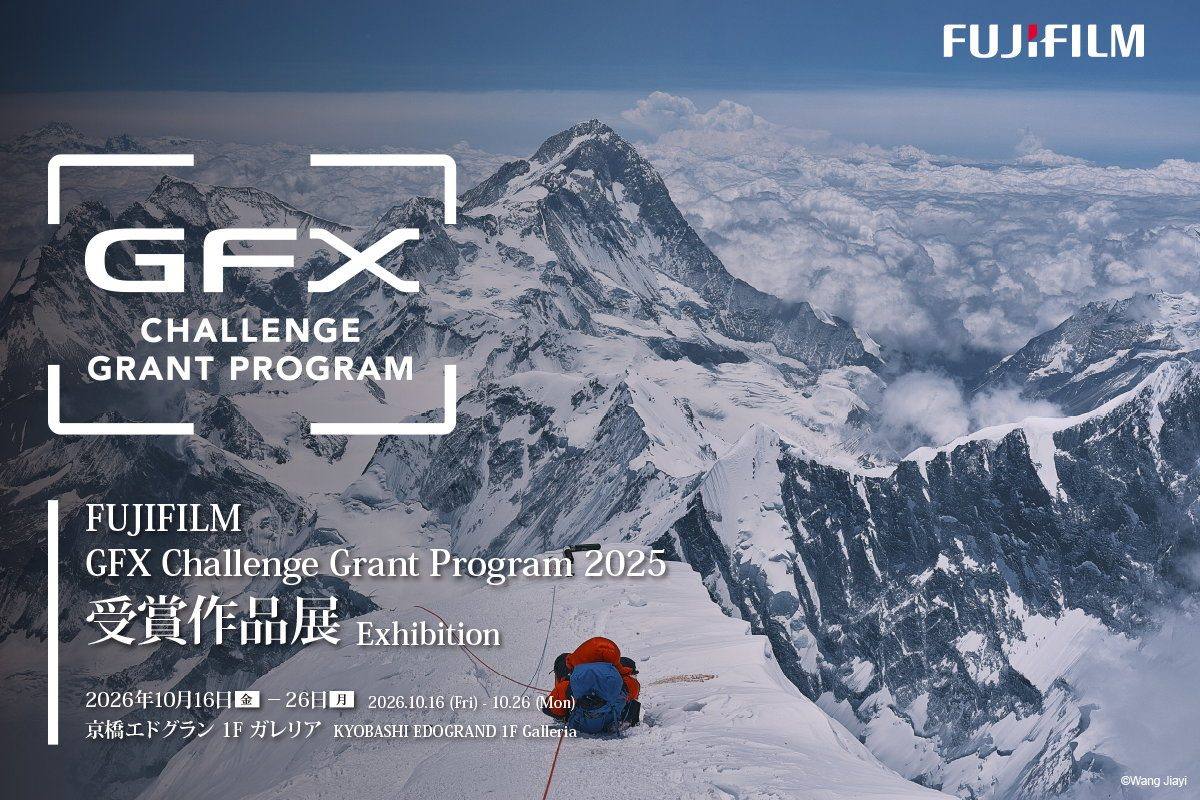
Fujifilm / Wang Jiayi
Fujifilm will exhibit all 15 winning projects from the GFX Challenge Grant Program 2025 in Tokyo this month, as part of T3 PHOTO FESTIVAL TOKYO 2026. The exhibition runs from October 16 to October 26, 2026, at the KYOBASHI EDOGRAND 1F Galleria in Kyobashi, Chuo-ku, and admission is free. Tokyo is not the end of the story. It is the first stop of a travelling showcase that continues to Osaka and then to further locations in Japan and overseas, with later dates to be announced through Fujifilm's own channels.
The structure of the show mirrors the structure of the grant. Five projects hold Global Grant Awards and ten hold Regional Grant Awards, and every one of them was made with the GFX system, Fujifilm's medium format mirrorless line built around a large format sensor. The range is deliberately wide. Documentary projects sit alongside portraiture and landscape work, still photography alongside projects that use the system's video capability, and the subjects move between countries and cultures without forcing a single theme onto the group.
The work itself
Consider three of the projects, because they show what the grant is for. Wang Jiayi's Human Sagas at Vertical Extremes sets two kinds of labour side by side: miners working far underground in China's Sanshandao Gold Mine and mountain guides working at altitude, up to the summit of Mount Everest. It is a geological study as much as a photographic one, and the Everest material supplies the exhibition's key visual, a climber small against a ridge of snow and cloud. Hsu Hao-Han's Urban Additions looks in the opposite direction, at the rooftop structures that residents add to buildings in Taiwan, and at what those additions say about housing, necessity and the right to adapt a home.
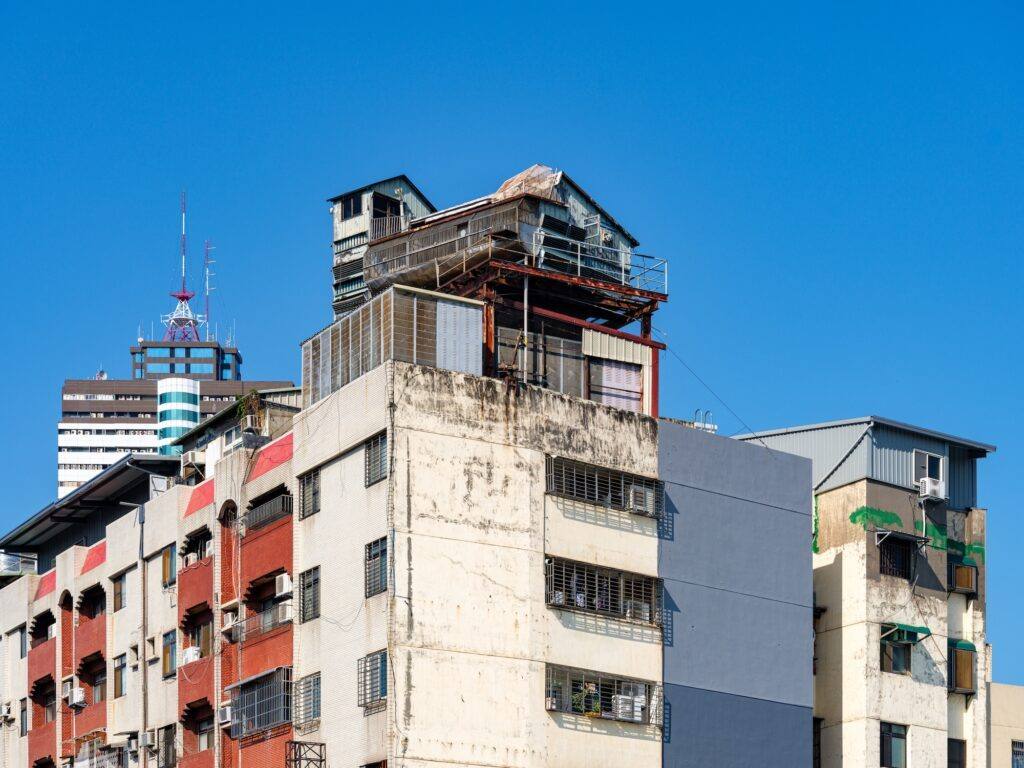
Hsu Hao-Han / Fujifilm
The regional projects are no less pointed. Arvind Patwal's The School of Second Chances documents elderly women at a grandmothers' school in India, presenting late-life education as a matter of dignity rather than novelty. Elsewhere in the fifteen are projects on Indigenous plant medicine in Peru's Amazon, on Amazigh weaving, on Filipino dress in the Canadian diaspora, on Nigerian men's hairstyles as a language of identity, and on wild horses in Bosnia and Herzegovina. Taken together, the selection reads less like a product demonstration than like a small festival programme that happens to share one camera system.
Why an atrium matters
The venue is part of the argument. The Galleria at KYOBASHI EDOGRAND is an atrium space, open in plan and lit by natural light, set in the middle of the city rather than behind the doors of a conventional gallery. That choice suits medium format work particularly well. GFX files are made to be printed large, and a grant exhibition earns its keep when the prints are allowed to work at architectural scale, where resolution and tonal depth stop being specifications and become something a visitor can judge from across a room. An atrium also changes who sees the work. A free exhibition in a public building catches people who did not come for photography at all, and for a programme whose stated purpose is exposure, that passing audience is not a compromise. It is the point.
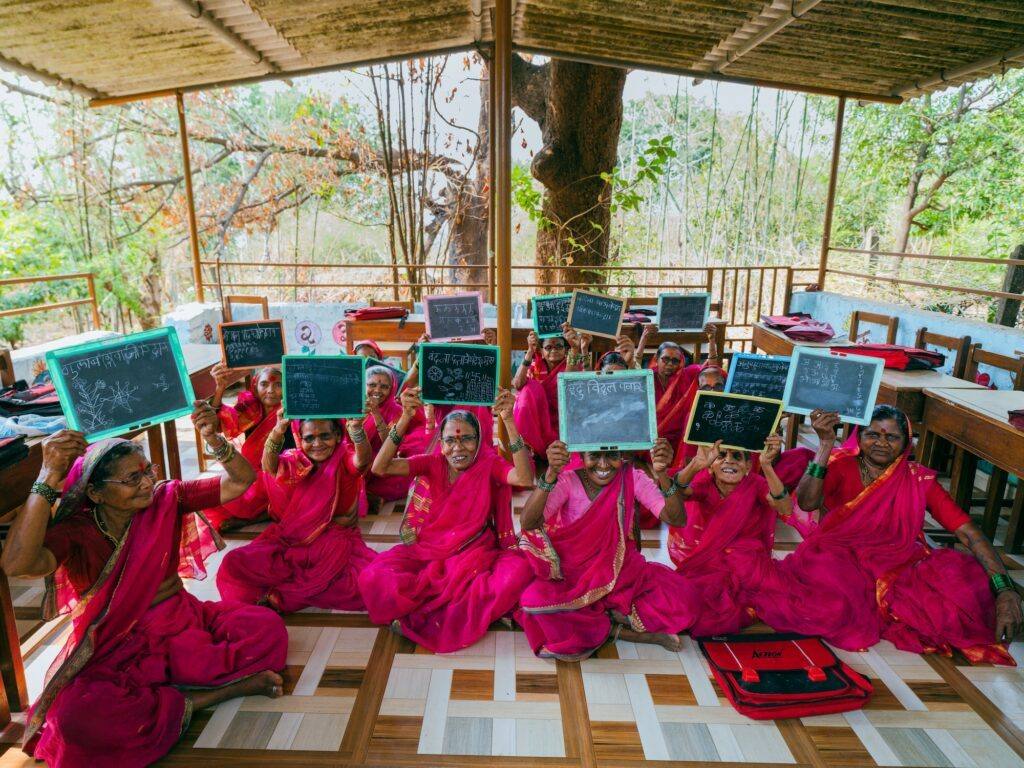
Arvind Patwal / Fujifilm
What a manufacturer grant does
The GFX Challenge Grant Program is Fujifilm's grant scheme for photographers and filmmakers worldwide. It offers financial support, equipment and global exposure to help original projects get made. In the 2025 round, the Global Grant Award carried a grant of $10,000 and the Regional Grant Award $5,000, with winning creators also receiving the use of a GFX system camera and GF lenses for the duration of their projects, plus mentoring and technical support. The money matters, but the exhibition may matter more. A grant that ends with a cheque produces a project. A grant that ends with a touring show produces an audience, a print record and a place in a festival programme, and those are the things that tend to lead to the next commission.
There is also a plainer commercial reading, and it should not be avoided. Medium format survives on culture as much as on specifications. Every serious system needs working photographers whose pictures make the format's case in public, and a grant programme is a disciplined way to find them. Fujifilm is not hiding that logic. The exhibition is organised by Fujifilm itself, and the work is inseparable from the cameras that made it. The honest question is whether the pictures stand up once the branding falls away, and on the evidence of the fifteen projects selected, a good number of them do.
Tokyo first
Opening in Tokyo, inside an international festival, gives the tour a particular weight. T3 brings Japanese and international photography into the same programme, and Kyobashi places the show in a business district rather than an art quarter, which fits a body of work concerned with labour, housing, education and land. From there the exhibition travels to Osaka and onward. Readers who cannot reach Tokyo should treat the later stops as the real opportunity, because a travelling grant show is designed to be seen more than once and in more than one city. For now, the facts are simple: fifteen projects, eleven days, one atrium, no ticket price. That is a good shape for a photography exhibition, whatever name is on the cameras.
Spotted an error? We correct openly: see our corrections policy.