feature
The Camera That Went to the Moon
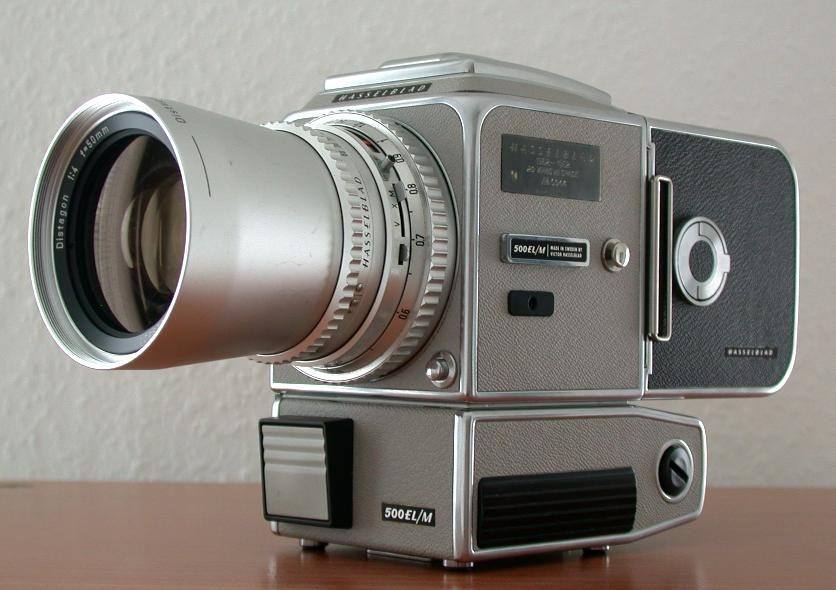
A stock Hasselblad 500C, stripped of its leather and painted black, flew on Mercury-Atlas 8 in October 1962. Seven years later its descendants photographed the first moon landing.
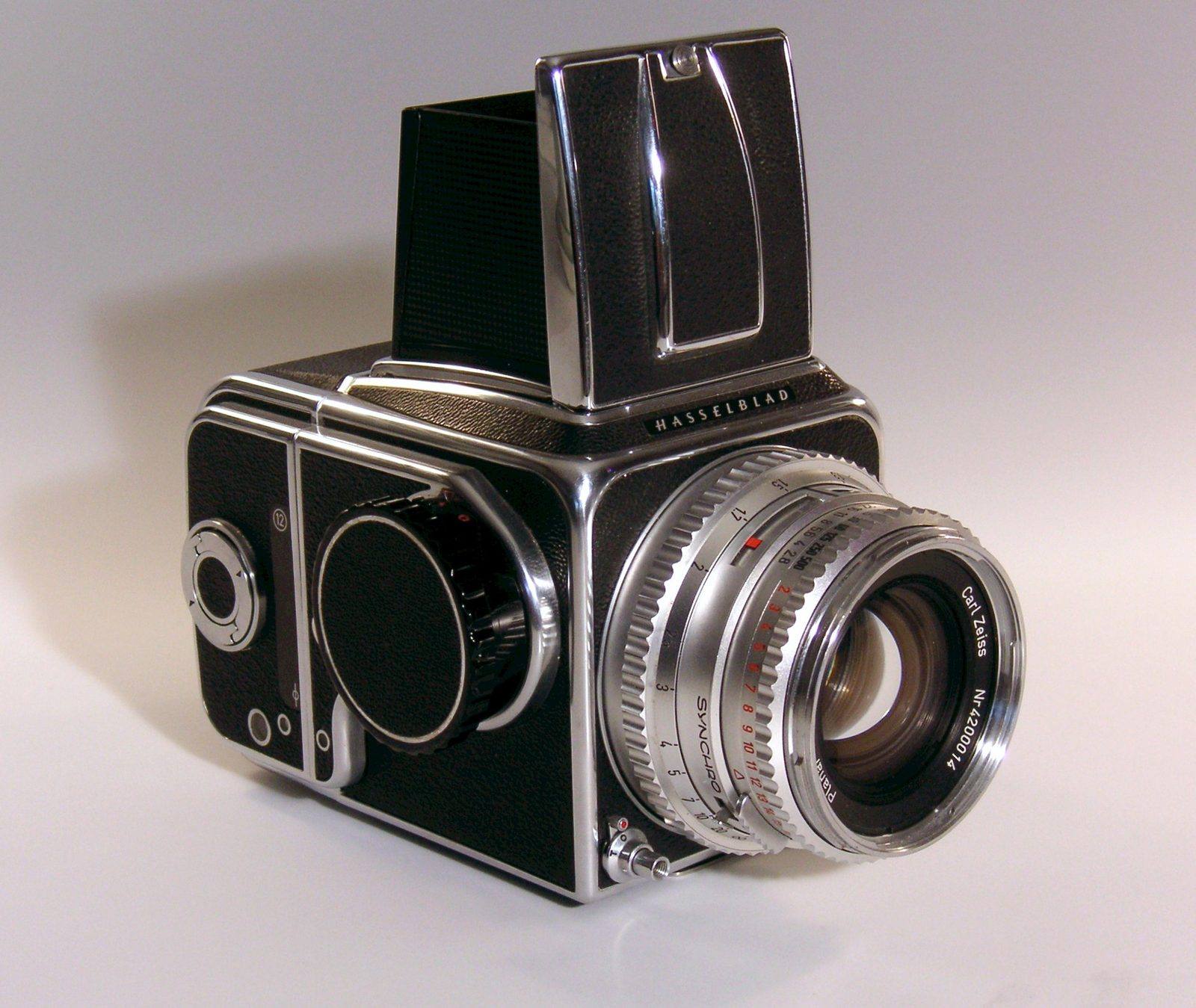
Holger Ellgaard, Wikimedia Commons (public domain)
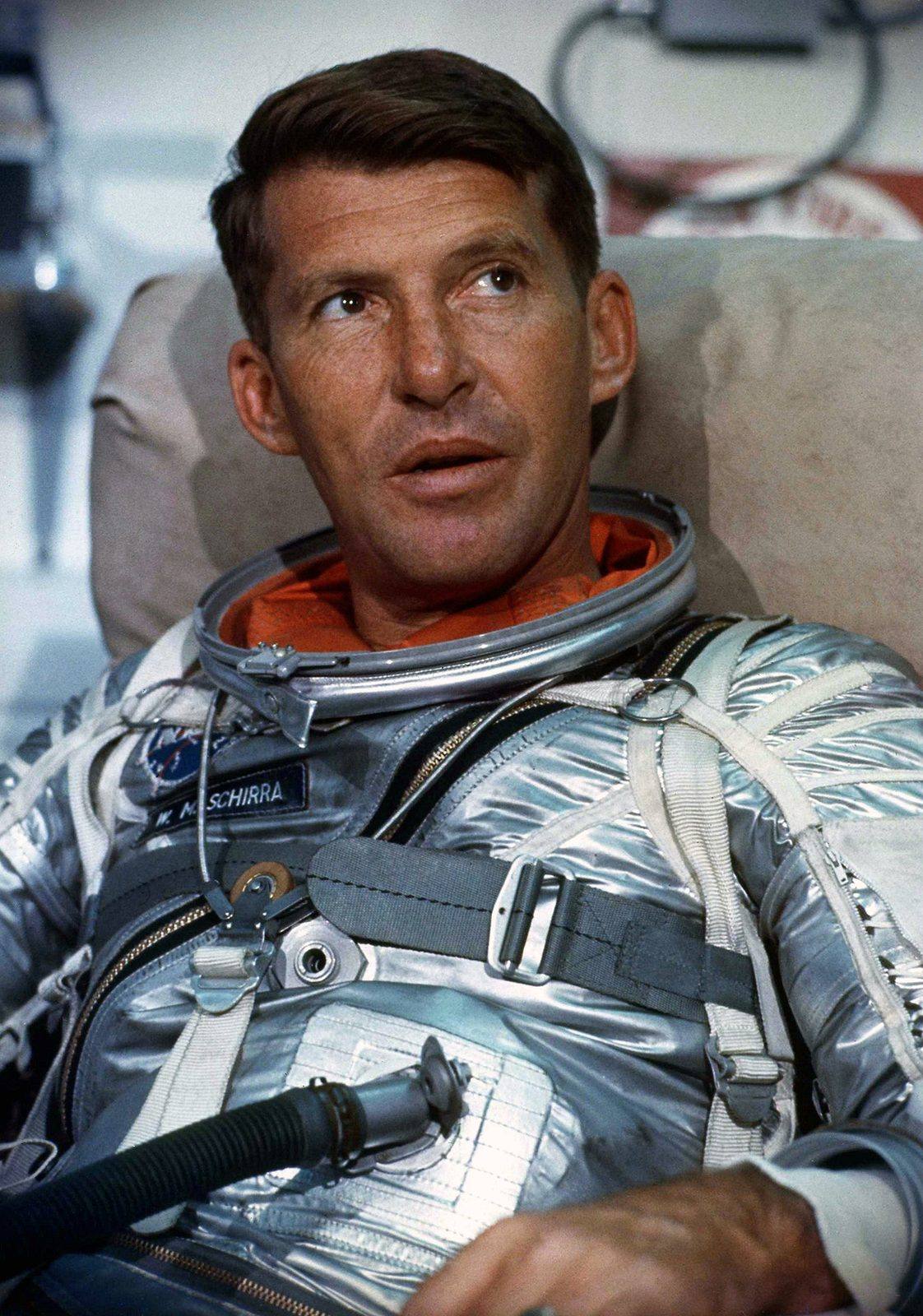
On October 3, 1962, a Mercury-Atlas rocket carried astronaut Walter Schirra into orbit with his personal camera aboard: a Hasselblad 500C, bought in a Houston camera shop, stripped of its leather covering by Schirra himself and painted matte black to kill reflections inside the capsule. NASA had been using another camera for orbital photography and getting disappointing results. Schirra, a photography enthusiast who already owned the Swedish medium-format camera, suggested the agency try his instead. The photographs he brought back from six orbits of the Earth were the first clearly recognizable images of the planet from space, and they changed Hasselblad's history permanently.
The 500C was, by the standards of 1962, simply a very good camera: a modular 6x6 medium-format SLR with a leaf shutter in each lens and automatic aperture stop-down, built in Gothenburg by a company whose photographic division traced back to 1885. What made it right for space was almost accidental. The modular design meant parts could be removed; the leaf shutter was reliable in temperature extremes; the large 6x6 negative forgave the imprecision of shooting through a capsule window. NASA bought several 500Cs and put them on a weight-loss program: leather covering off, auxiliary shutter out, reflex mirror and viewfinder removed, and a custom film magazine holding 70 exposures instead of the usual 12. Matte black paint finished the job.
NASA (public domain)
Seven years to the surface
The Mercury flights proved the concept, and Hasselblad established a dedicated department at the Gothenburg factory to develop cameras for space. By Apollo, the cameras were purpose-built. On July 20, 1969, two Hasselblads documented the first moon landing: the Hasselblad Data Camera, fitted with a Zeiss Biogon 60mm f/5.6 lens and a 70mm film magazine, and the Hasselblad Electric Camera with a Zeiss Planar 80mm f/2.8. The Data Camera carried a Réseau plate, a glass plate etched with cross-marks that printed onto every negative so photogrammetric measurements could be taken from the images afterward. The bodies were painted silver to regulate temperature across a range later stated as minus 85 to 248 degrees Fahrenheit. Neil Armstrong shot the lunar surface photographs with the Data Camera mounted to the chest of his spacesuit.
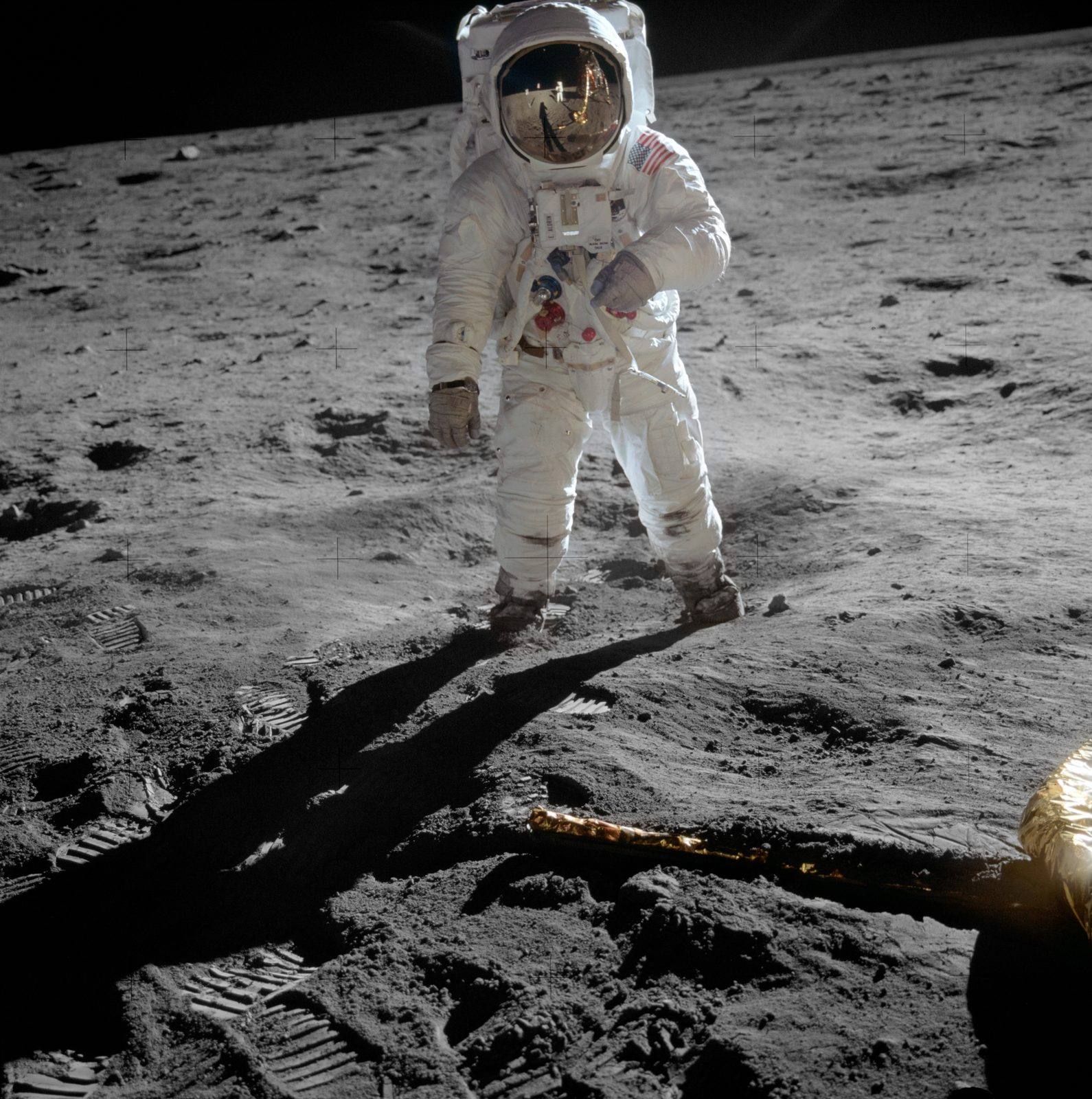
Few people realize what happened to those cameras. After the film magazines were removed, the bodies and lenses were left behind: the weight budget for the return journey was absolute, and every gram counted. Twelve Hasselblad bodies and lenses remain on the lunar surface today, part of what a 1969 release valued at about a million dollars of equipment abandoned across the program. The most famous photograph of the mission, Aldrin standing on the Moon with Armstrong reflected in his visor, was taken on one of them.
The crosses are still visible in the famous frames if you know where to look: small plus-marks scattered across the lunar photographs, the Réseau plate's calibration marks turning each image into a measurable document. It is a very Hasselblad detail, the instrument-maker's instinct surviving intact inside a historic moment.
NASA (public domain)
The household name
The partnership made Hasselblad a household name in a way no advertising could. In 1965, millions listening to a Gemini mission heard James McDivitt tell Edward White to move closer so he could photograph him with the Hasselblad, the brand name spoken from orbit into living rooms. The cameras kept flying through Apollo and Skylab, and the relationship lasted decades.
Schirra's original 500C, the Houston shop camera that started it all, later changed hands at auction for $275,000, a price that had nothing to do with the model's scarcity. The 500C was a common camera, built in large numbers. What the buyer paid for was provenance: the documented path from a shop counter to six orbits of the Earth to the beginning of the most famous partnership in photographic history.
NASA (public domain)
There is a lesson in that which collectors understand well. The hardware that made history was not exotic. It was a well-built, widely sold medium-format camera, modified with a knife and a can of black paint, then trusted to do serious work in an unforgiving place. Hasselblad still trades on those photographs more than half a century later, and rightly so: no marketing department has ever produced an image with the authority of the ones those stripped-down 500Cs brought home.
Spotted an error? We correct openly: see our corrections policy.