news
Carbon at the Touch Points: The Leica Q3 43 Formula 1 Edition
Leica has rebuilt the Q3 43's grip, thumb rest and soft release in carbon fibre, added an exclusive Formula 1 picture look, and priced the result at $9,950. The camera underneath is unchanged, which is precisely the point worth examining.
Leica Camera AG
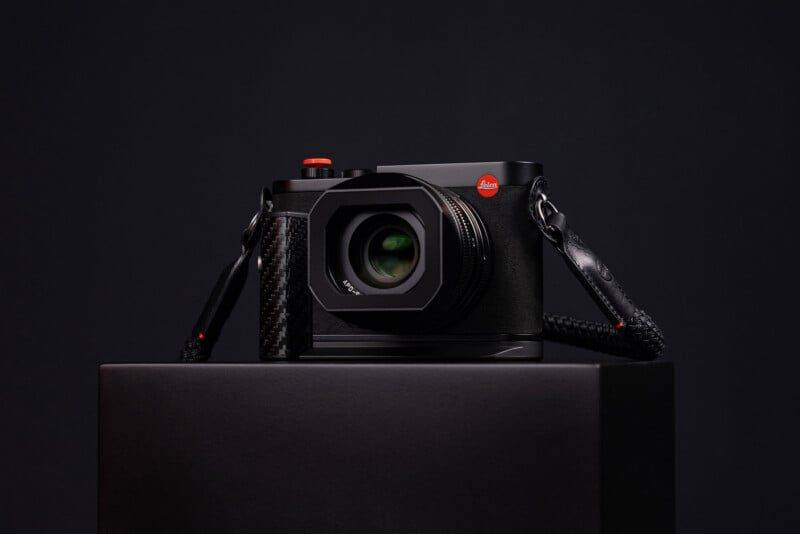
Leica's newest camera is a study in where a special edition chooses to spend its effort. The Q3 43 Formula 1 Edition, unveiled in Los Angeles on October 20 and on sale from October 21, keeps the optics, sensor and electronics of the standard Q3 43 exactly as they are. What changes is everything the photographer's hand touches. The handgrip, the thumb rest and the soft release button are finished in carbon fibre, the body covering is a non-slip Microvelour modelled on the grip of a racing steering wheel, and the price is $9,950 in the United States, 7,300 pounds in the United Kingdom and 8,500 euros in the eurozone.
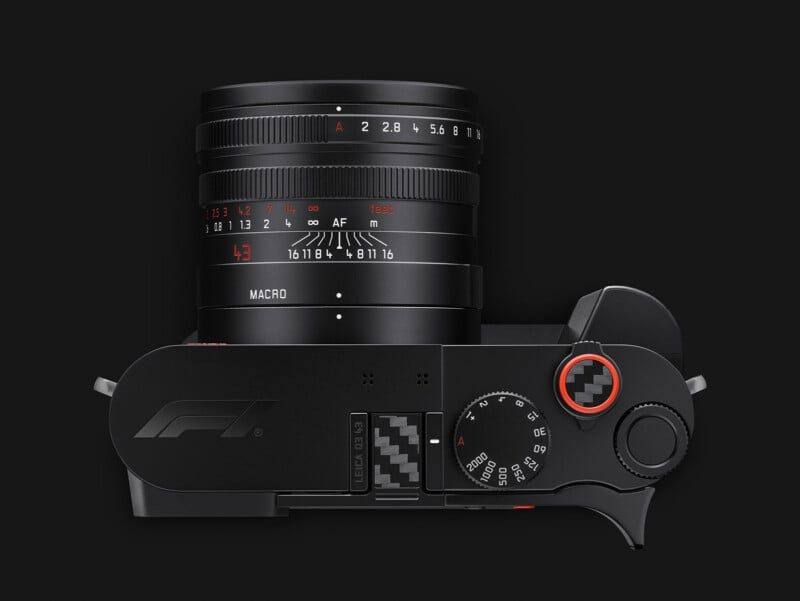
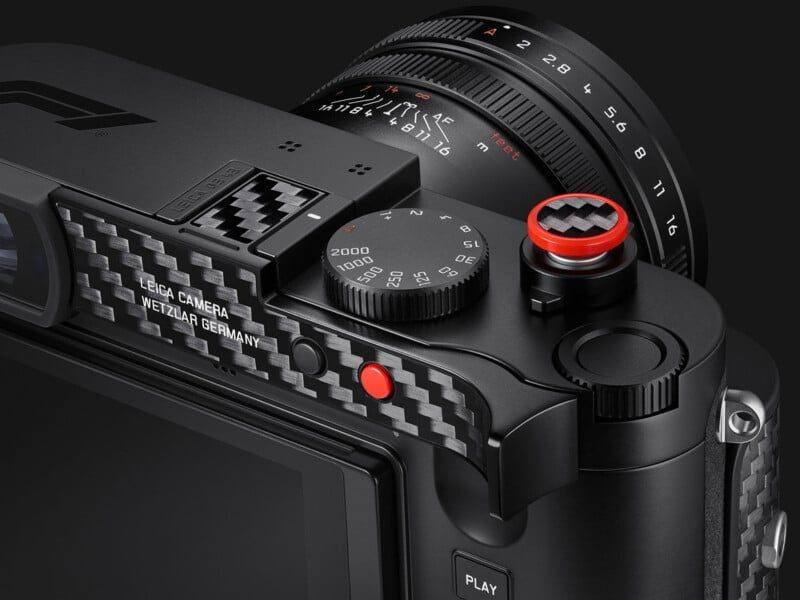
Special editions are a permanent parallel product line at Leica, and they are easy to dismiss as cosmetics for collectors. This one deserves a closer reading, because its material choices are functional in a narrow but real sense. Carbon fibre is not a material Leica ordinarily uses in its cameras. Here it appears at the three points where the camera is held and fired, and Leica states that the carbon components are manufactured and tested in Germany. The weave is left visible, so the grip's texture changes with the light as the camera moves. Whether that justifies the edition's premium is a judgement for the buyer. That the material is placed where hands actually work, rather than spread across the body as decoration, is at least a defensible engineering answer to the question every special edition has to answer: why does this exist?
Red details, and a look that exists only here
The racing references are specific rather than generic. The soft release button carries a carbon inlay with a red rim, and one of the two function buttons on the thumb rest shares the red treatment, a nod to the colour-coded buttons on a Formula 1 steering wheel, where a driver has to find a control without looking at it. The Formula 1 logo appears on the top plate and on the lens cap. The handgrip is the wireless charging version, finished with a carbon shell. The set includes a rope carrying strap carrying both brands' logos, and the packaging is finished with a red inlay.
Leica Camera AG
The one change that affects the photographs themselves is software. The edition carries an exclusive picture profile, called the Formula 1 look, which Leica describes as raising contrast and enriching colour saturation to suit the atmosphere of a racetrack and its paddock. It is applied through the Leica FOTOS app and can be switched on while shooting, with the effect visible in the viewfinder before the shutter fires rather than only in post-processing. Exclusive looks are becoming a standard ingredient of Leica's collaborations, and they raise an honest question: a rendering profile costs nothing to copy, so its value rests entirely on its exclusivity being maintained. Owners of the standard Q3 43 cannot buy this one. That scarcity is the product.
The camera underneath
None of this alters the instrument. The fixed lens remains the APO-Summicron 43mm f/2 ASPH., the focal length Leica positions as the closest in the Q range to natural human vision. Behind it sits the full frame BSI CMOS sensor with Triple Resolution Technology, recording at 60, 36 or 18 megapixels, with the fast hybrid autofocus and the video functions of the standard camera carried over unchanged. The edition is compatible with the existing Q3 and Q3 43 accessories.
Leica Camera AG
The launch itself tells you whom the edition is for. Leica presented the camera at its Los Angeles store and gallery, hosted by Formula 1 presenter Ariana Bravo and by Jenson Button, the 2009 Formula 1 drivers' world champion. On the gallery walls were 26 motorsport photographs by the Italian photographer Callo Albanese. A camera launch staged as a gallery evening, fronted by a broadcaster and a champion rather than by an engineer with a specification sheet, is marketing aimed at two audiences at once: Leica's own collectors, and Formula 1's considerably larger public, for whom this may be the first Leica they ever consider.
That dual audience explains the edition's logic better than any single detail of it. Leica gains a presence inside the world's most heavily sponsored sport. Formula 1 gains a luxury object that treats its materials science as heritage. The photographer gains a Q3 43, which was already a serious camera, with a grip that feels different and a colour profile nobody else has. Judged as an instrument, the Formula 1 Edition changes nothing. Judged as an object, which is how special editions are actually bought, it changes the three surfaces the owner touches most. Both judgements are true, and the $9,950 price is set by the second one.
Specifications
| Lens | Leica APO-Summicron 43mm f/2 ASPH., fixed |
|---|---|
| Sensor | Full frame BSI CMOS, Triple Resolution Technology |
| Resolutions | 60, 36 or 18 megapixels |
| Price | $9,950 / GBP 7,300 / EUR 8,500 |
| Availability | October 21, 2026, Leica Stores, Leica Online Store and specialist retailers |
Spotted an error? We correct openly: see our corrections policy.