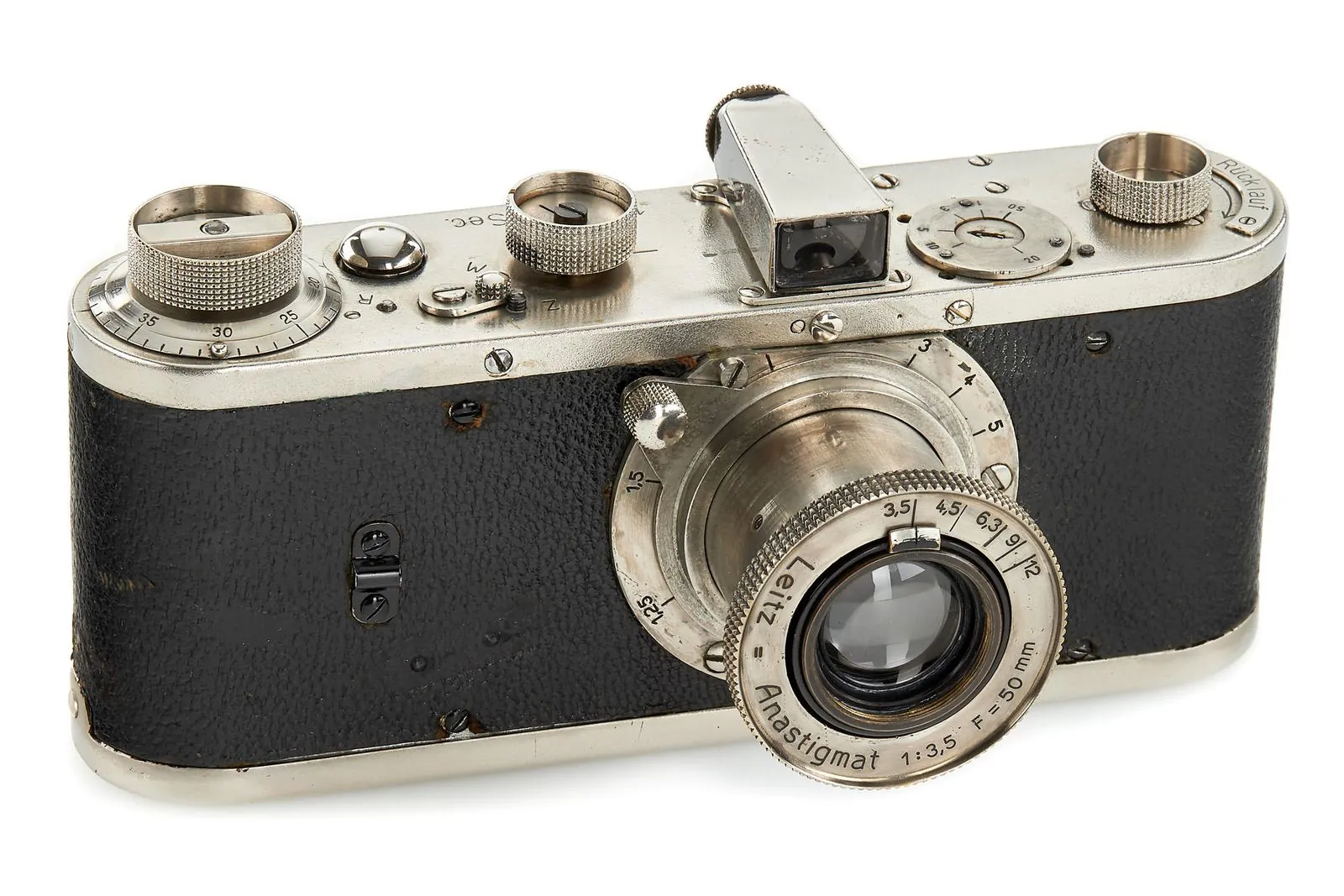
news
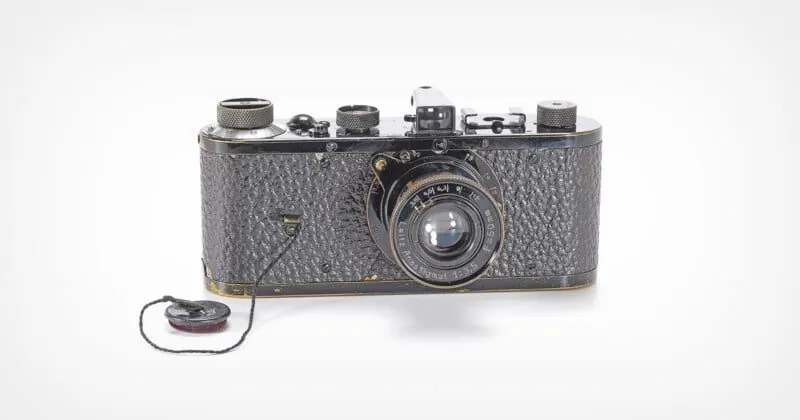
A Working Leica BOX Leads Leitz Photographica Auction 49
More than 400 lots come to Wetzlar on November 28. The headliners are a fully operational 1950s Leica BOX prototype estimated at 400,000 to 500,000 euros, Sebastiao Salgado's Leica R6, and a Soviet space camera built for the lunar programme.
Wetzlar Camera Auctions
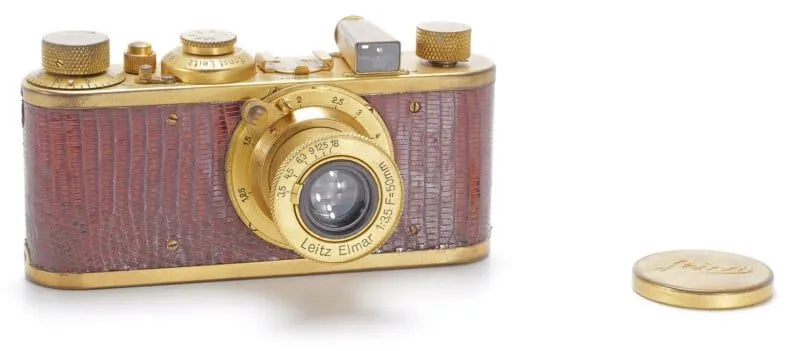
The autumn camera auction season now has its centrepiece. Leitz Photographica Auction 49 takes place on November 28 at Leica World in Wetzlar, with more than 400 lots of historic cameras and photographic equipment. Estimates run from three figures to six, and pre-bidding is already open. The catalogue's lead item is not a production camera at all, but a prototype that was never sold the first time: the Leica BOX.
The BOX was developed in the mid 1950s as an extremely compact camera for the 18 x 24 millimetre half frame format. It measures 100 by 64 by 48 millimetres, which makes it one of the smallest cameras Leica ever built. Only two were produced. One, fitted with a Summaron 2.8cm f/5.6, is a non-working design study held by the Leica Museum and archive in Wetzlar. The other is the camera now offered, serial number 000.01, fitted with a fixed Summaron 3.5cm lens and fully operational. It appears as lot 37, with a starting price of 200,000 euros and an estimate of 400,000 to 500,000 euros.
Prototypes occupy a particular place in this market because their supply is not merely small but closed: no further examples can surface from production, only from archives and estates. The BOX also documents a road Leica did not take. Half frame economy formats were pursued seriously by several makers in the 1950s, and Leica's answer stayed on the shelf while the M system defined the company's future. Collectors are being asked to price a decision as much as an object, and the estimate reflects that reading.
The Salgado R6, and what provenance can carry
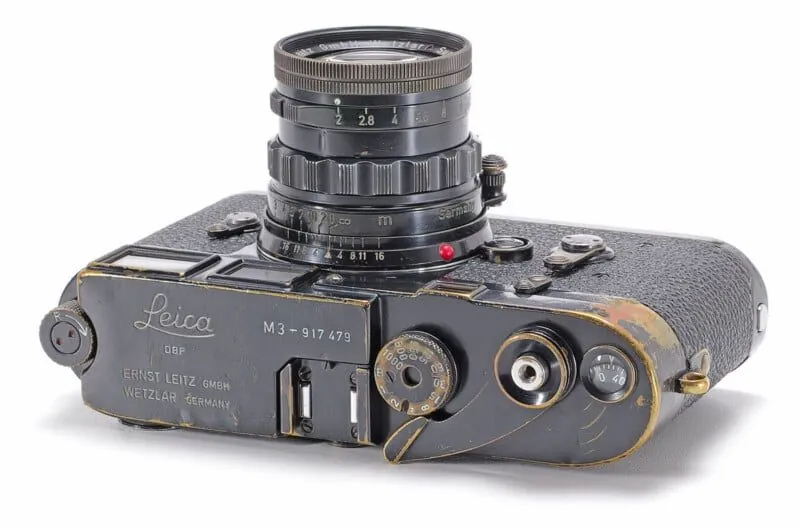
The sale's second story is a working photographer's camera. The Leica R6 offered in Wetzlar was owned by Sebastiao Salgado, the Brazilian Magnum photographer who died in 2025, and was the camera he worked with in Kuwait in 1991, photographing the oil fires there during the Gulf War, work that formed part of the series published in his book Workers. The lot includes two photographs from that series and a signed copy of the limited edition of Workers. Its estimate is 28,000 to 32,000 euros.
That figure is instructive about how this market prices association. A Leica R6 without the history is a four figure camera on a good day. The estimate here is roughly ten times that, and the premium rests entirely on documented use by a named photographer on a named body of work, supported by the prints and the signed book in the same lot. Provenance of this kind is either verifiable or it is nothing, and auction houses know that their cataloguing is the product. Readers comparing estimates across the sale should note how much of this lot's value sits in its paperwork rather than its brass.
Wetzlar Camera Auctions
Optics and a Soviet outlier
Two further highlights connect the sale to stories this publication has followed this year. Auction 49 offers the Summicron-M 66mm f/2 bearing serial number 001, estimated at 16,000 to 20,000 euros: the production lens, launched earlier this year, that revives the rare Canadian built Elcan 66mm f/2 design. A serial number of 001 is a collector category of its own, priced by position in the production run rather than by optics alone.
From the other side of the Cold War comes the sale's most specialised lot: an SKD space camera set built by Arsenal in Kiev in 1968 for the Soviet lunar programme, complete with three lenses and its accessories. The SKD is a single lens reflex designed for perforated 70mm film, producing 50 by 50 millimetre negatives, with magazines holding about 100 exposures, or up to 180 on thin base film, and a polished glass pressure plate to keep the film flat. It carries a starting bid of 50,000 euros and is expected to reach as much as 100,000 euros.
Wetzlar Camera Auctions
Alongside the main sale, the house runs its online auction, Leitz ON, with bidding open from October 29 to November 29. The season's context needs no exaggeration: in October, a 1923 Leica 0-Series prototype made 4.25 million euros at Wetzlar Camera Auctions, as we reported at the time. Estimates are not results, and this publication will report what the BOX and the R6 actually make when the hammer falls. Until then, the catalogue itself is the news: the rarest Leica of the season is a camera the company chose, seventy years ago, not to sell.
Specifications
| Sale | Leitz Photographica Auction 49, November 28, 2026, Leica World, Wetzlar |
|---|---|
| Lots | More than 400 |
| Leica BOX | Lot 37, serial 000.01, estimate EUR 400,000 to 500,000, starting price EUR 200,000 |
| Salgado Leica R6 | Estimate EUR 28,000 to 32,000, with two prints and a signed limited edition of Workers |
| Online sale | Leitz ON, bidding October 29 to November 29, 2026 |
Spotted an error? We correct openly: see our corrections policy.