news
Pixii Enters Liquidation, and the Digital Rangefinder Becomes a Monopoly Again
French court records reported this week show Pixii's restructuring converted to judicial liquidation in July. The only independent maker of digital rangefinder cameras is now being wound down, its next camera unfinished, and Leica's M is once more the only new rangefinder a photographer can buy.
Pixii
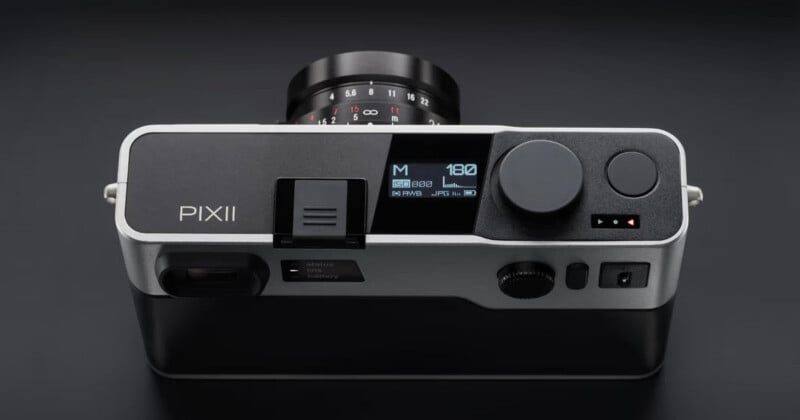
The news surfaced this week, but the decision it reports is three months old. According to French corporate and legal records covered by Leica Rumors on October 19 and by PetaPixel on October 20, the camera maker Pixii is in judicial liquidation, the formal French insolvency procedure under which a company is wound down and its assets sold to pay its creditors. The Commercial Court of Besancon converted Pixii's court-supervised restructuring into liquidation on July 22, 2026. The judgment was published in France's official business notices in early August, and the company had been authorised to continue operating only until July 31.
The timeline matters, because it corrects the impression that this was a sudden collapse. The court opened restructuring proceedings, the redressement judiciaire, on December 10, 2025, giving the company an observation period in which to find a path back to viability. On May 20, 2026, that period was extended to December 10, 2026. Two months later the court concluded the effort had failed and converted the case to liquidation, appointing a liquidator. Reporting this week also notes that Pixii has been seeking investors, partners and collaborators who might keep the business, or at least its next camera, alive. Under liquidation, any rescue of that kind requires a transaction the court approves. It is a narrow door, but it is the same door through which the company's designs, patents and remaining inventory will pass if a buyer appears.
What Pixii was trying to do
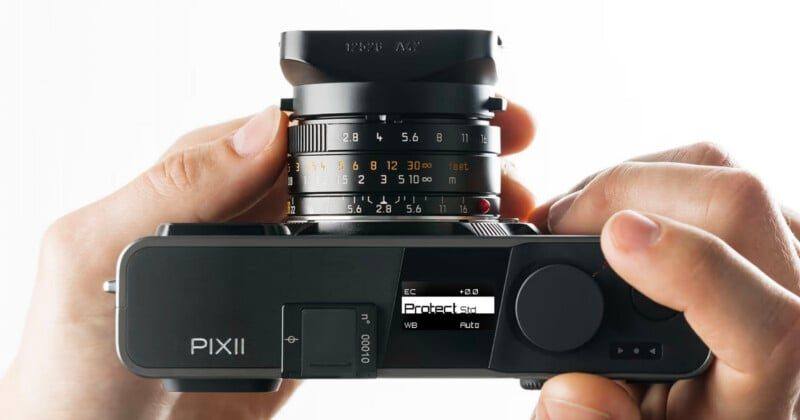
Pixii, based in Besancon, made the only digital rangefinder cameras not made by Leica. Across three models it pursued ideas the incumbent had not: a rangefinder with a Leica M mount built around an upgradeable platform, in which the sensor and processor could be updated rather than the whole camera replaced; a system-wide monochrome mode; and a hybrid rangefinder arrangement able to display information including a histogram. Its current cameras remain listed for sale at reduced prices in the reports: the Pixii Max, a 24.5-megapixel full frame model, at $4,499 after a $500 reduction, and the 26-megapixel APS-C Pixii, model A2572+, at $2,799 after an $800 reduction.
Pixii
The company's next camera is the saddest line in the story. In October 2025 Pixii began teasing a redesigned digital rangefinder, a genuinely new form after three models that shared one body language, initially discussed for 2026 and later pushed toward 2027. Reporting on the liquidation records describes the design as essentially complete and the company as having been looking for the funding or partnership to put it into production. A finished design that cannot be manufactured is an asset in a liquidation sale, which means the camera's most likely future is as a line item in someone else's acquisition.
The market it leaves behind
Step back and the structural fact is stark. The digital rangefinder was already close to a one-company category. Epson's R-D1, the only earlier challenger, was discontinued in 2009. Pixii's exit returns the segment to a single maker for the first time since the French company began shipping cameras: a photographer who wants to buy a new digital rangefinder now has Leica's M range and nothing else. Competition in a niche this small was never going to discipline prices in the way it does in volume markets. What it did was prove that the concept could be approached differently, with upgradeable electronics and software-led features, and it gave M-mount photographers a second, cheaper body option that used the lenses they already owned.

Pixii
For existing Pixii owners, the practical questions are about support rather than value: whether firmware updates continue, whether repairs remain available, and what happens to the company's software services if the business is dissolved rather than sold. None of those questions has a published answer yet, and PetaPixel reports that it has asked Pixii for comment. Owners should treat any answer as provisional until it comes from the liquidator or a confirmed buyer, since in a liquidation the authority to make commitments no longer rests with the company's founders.
Small camera companies fail in a particular way: slowly, in court filings, while their websites still promise the future. Pixii's teaser for its next camera promised, in the company's own campaign line, to invent the future. The records of the Besancon court say the future now belongs to whoever buys the design. The rangefinder, a nineteenth-century focusing idea that survived into the digital age on the strength of one German incumbent and one French challenger, is back to one. The idea deserved two. The market, evidently, would only pay for one, and that is the whole story of the premium camera business in miniature.
Spotted an error? We correct openly: see our corrections policy.