news
Serial 103: A 1923 Leica 0-Series Makes 4.25 Million Euros at Wetzlar
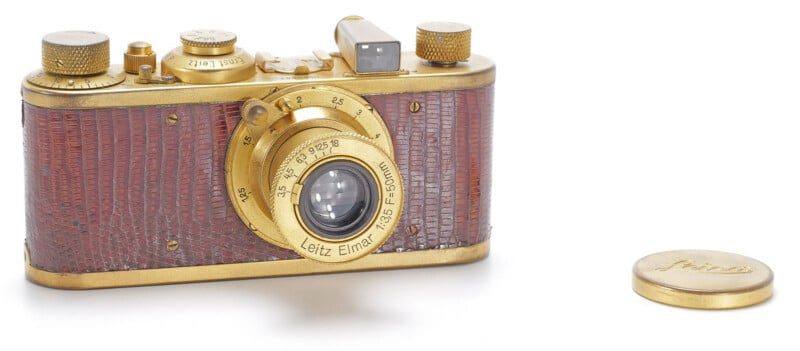
The eighth Wetzlar Camera Auctions sold the third camera in Leica's prototype sequence for more than twice its top estimate, after a twenty-minute bidding contest. The rest of the 259-lot sale showed where the collector market's strength actually sits.
Wetzlar Camera Auctions
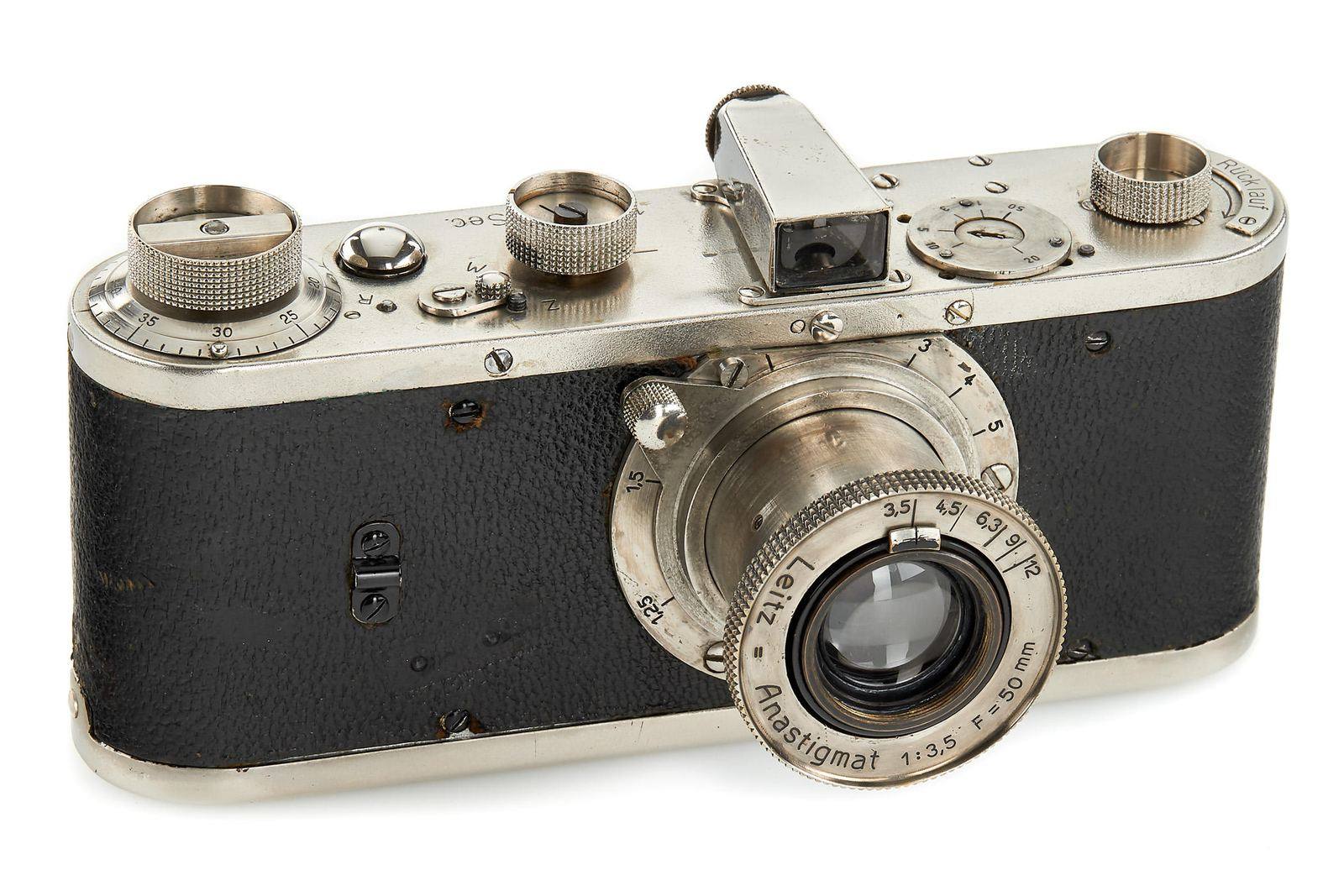
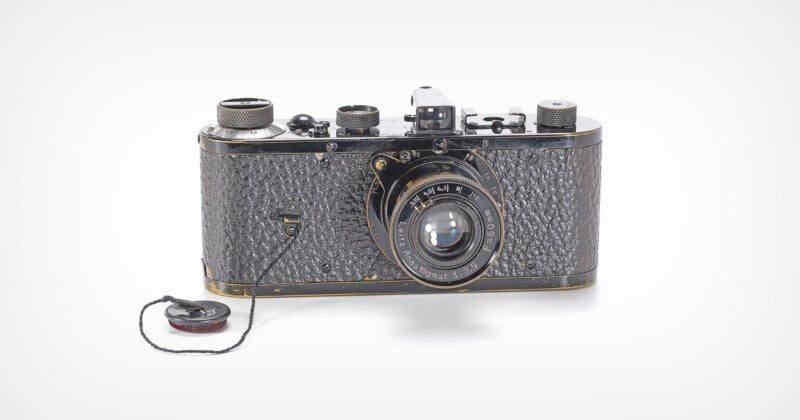
There is a neatness to the numbers that an auctioneer could not have arranged. The camera was serial number 103. It was catalogued as lot 103. It was 103 years old. And on Saturday, October 10, at the eighth Wetzlar Camera Auctions in Germany, the Leica 0-Series No. 103 of 1923 sold for 4,250,000 euros, reported at about $4.75 million, after a bidding contest of some twenty minutes among bidders in the room, on the telephones and online. The presale estimate had been 1.5 to 2 million euros. The result more than doubled the top of it.
Context is what separates a headline price from a market signal, so the context first. The 0-Series cameras were the prototypes built in 1923 to test the small 35mm camera concept before Leica committed to serial production of the Leica I in 1925. Between 22 and 25 were made, with serial numbers beginning at 101, which makes No. 103 the third camera in the sequence. Sixteen examples are known to survive, in museums and private collections. A 0-Series is not rare in the way a limited edition is rare. It is rare in the way a first draft of a founding document is rare, and the Wetzlar result sits in a sequence of comparable results rather than outside it: No. 112 made 7.2 million euros at Leitz Photographica in 2025, and Oskar Barnack's own No. 105 set the record for any camera at auction in 2022. No. 103 is the third data point in the same line, not an anomaly in it.
Prototypes carried the day
Read down the results of the 259-lot sale and a pattern forms. The handmade Leica Model A prototype, the link between the 0-Series and the production Leica I, sold for 225,000 euros. A prototype Leica M4 of 1965, with handmade components and only two examples known, sold for 375,000 euros. A Leitz prototype camera for the square 24 by 24mm format, dating to between 1946 and 1948 and only recently uncovered, sold for 137,500 euros. The gold-plated Leica I Model C Luxus of 1931, one of only two examples of its specific model, also sold for 375,000 euros.
Wetzlar Camera Auctions
The pattern is that uniqueness with documentation outperformed rarity in the ordinary sense. A prototype is by definition a population of one or two, and its value rests on the paper trail that proves it is what it claims to be. Wetzlar's co-owner Lars Netopil attributed the No. 103 result to the camera's historical significance, its originality and its provenance, and the rest of the sale's top results support reading those three qualities, in that order, as the market's current pricing formula.
Black paint, and a Soviet surprise
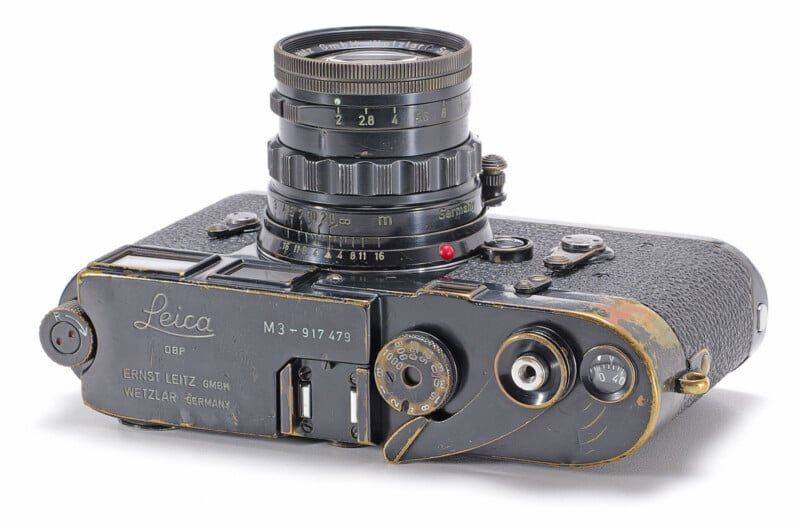
Below the prototypes, the dependable middle of the Leica market performed as it reliably does. A Leica MP in black paint from 1956 sold for 325,000 euros. An early black paint M3, its frame counter finished in black to match the body, brought 187,500 euros. A sample MP in a grey-blue lacquer, a design study dating to about 2015 rather than a production finish, still made 40,000 euros, which says something about how strongly a finish alone, even an experimental one, can price a modern Leica.
Wetzlar Camera Auctions
The sale's most interesting result may have come from outside Leica entirely. An Arsenal Salyut 1V space camera of 1968, built for the Soviet space programme, sold for 75,000 euros, and a Nikon Fish-Eye Nikkor 6.2mm f/5.6 prototype lens of 1970, with a 220-degree field of view, sold for the same figure. Wetzlar's co-owner Jo Geier pointed to growing international interest in Soviet space photography equipment, a field that for decades was overshadowed by the collector demand for NASA material. If that interest holds, the Soviet programme's cameras are where the next provenance stories will come from.
One note on the figures themselves. Wetzlar reports its results as final sale prices including buyer's premium, so the prices in this report are the all-in figures a buyer actually paid, not hammer prices with fees still to add. Comparisons with other houses should be made on the same basis. What is not in doubt is the direction. A hundred and three years after Leica built a handful of prototypes to test an idea, the third of them is worth more than twice what the specialists expected. The market for the genuinely singular camera is not cooling. It is concentrating.
Spotted an error? We correct openly: see our corrections policy.